Guides · Garage doors
Garage door motor working but the door is not opening
When you can hear the motor but the door won't go up, the motor usually isn't the problem. It's the link between the motor and the door, the door itself, or something stopping it on purpose. Here's how to tell which, safely.
Six-month guarantee on our repairs
24/7 emergency repairs across Gauteng
What do you hear?
- The motor runs normally, but the door doesn't move: the motor has been released from the door. See released.
- The motor strains or hums, the door lifts a little, then stops or goes back down: the door is too heavy for it, usually a spring or cable problem. See the springs.
- A click, or a beep, and nothing moves: power, a lock-out, or a lock. See locks and lock-outs and power.
- It opens part of the way and stops: limits, the tracks, or balance. See part-way.
- The wall button works, the remote doesn't: the remote. See our guide to remotes that don't work.
If your motor has a display, write down what it shows before you do anything else.
The motor runs, the door stays put
An overhead garage motor moves the door through a carriage that rides along its rail. If someone pulled the release during a power cut, the carriage is no longer connected, so the motor runs its chain and the door doesn't follow.
On Centurion's SDO4, the motor is engaged again by pulling the release handle back towards the motor until it clicks, then moving the carriage until it meets the chain and locks on. Centurion adds two warnings worth repeating: never open or close the door by pulling on the release handle, and release the motor with the door fully closed wherever you can, because an unbalanced door can drop. Other motors are similar; our model manuals have the steps.
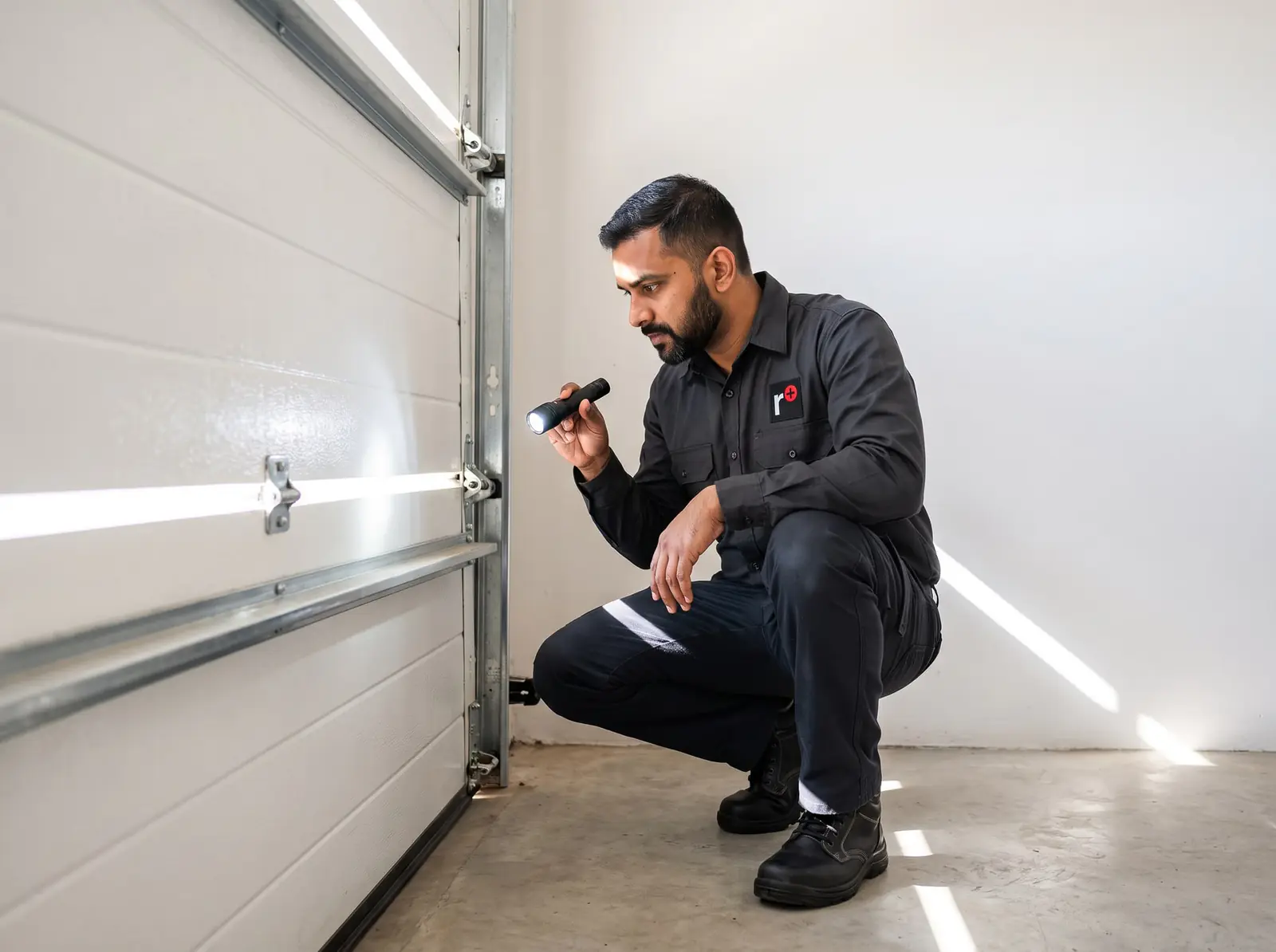
The motor strains: springs, cables and balance
A garage door motor doesn't lift the door's weight; the springs do. The motor only guides a balanced door up and down. Centurion's definition of balanced is useful: the door takes the same effort to open as to close, no more than about 10 kg either way, and it stays roughly where you leave it, moving no more than 100 mm on its own.
When a spring or cable breaks, the door suddenly weighs its full weight, the motor can't lift it, and it stops, reverses, or reports a fault. Centurion's SDO4 shows E3 for a door out of balance, E5 for a door too heavy for its force setting, and E6 for a collision.
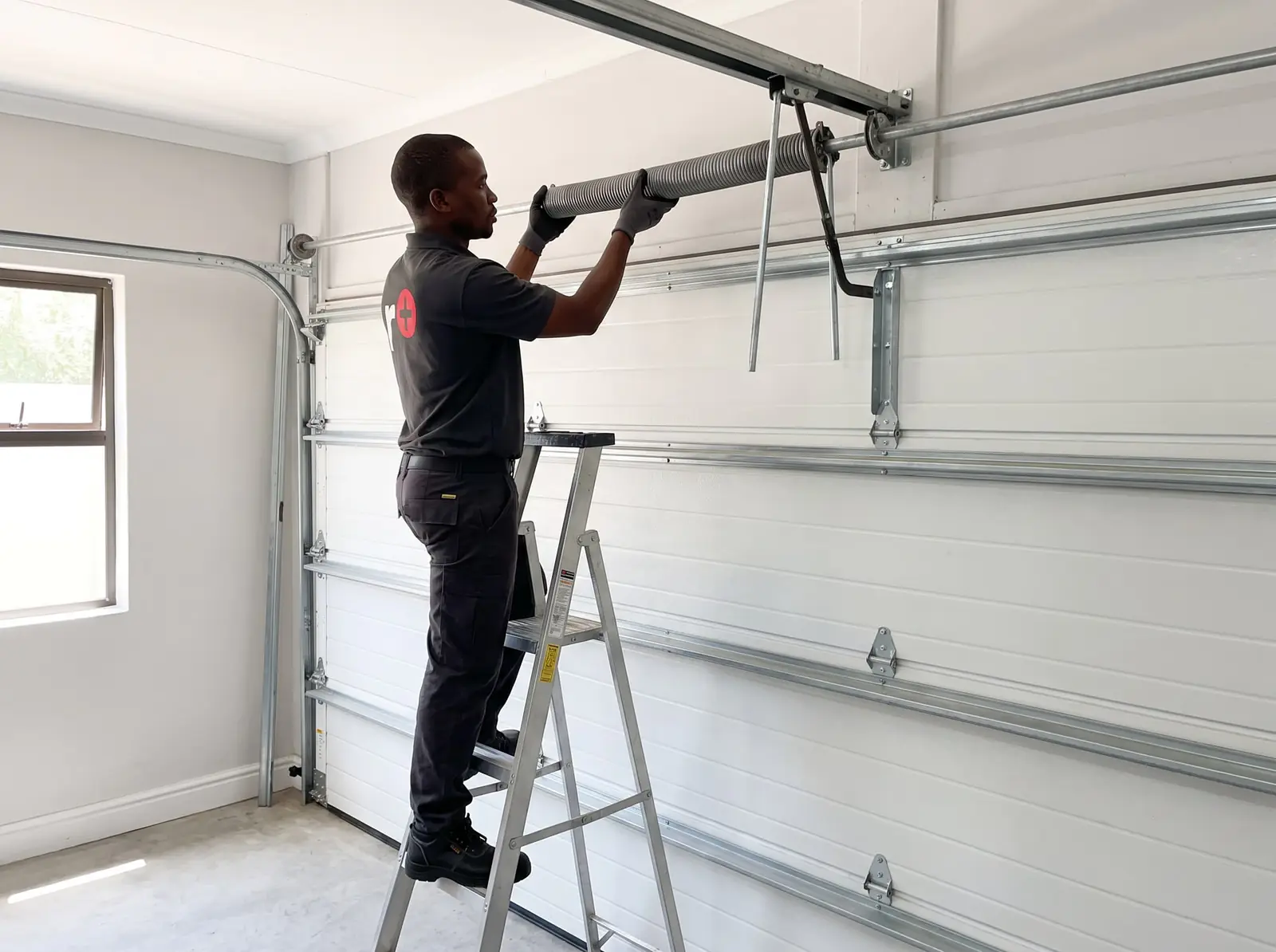
Signs it's the springs:
- A loud bang from the garage recently, when nobody was using the door.
- A gap in a torsion spring's coils above the door.
- A loose or frayed cable at a bottom corner of the door.
- The door is very heavy, or drops, when released and lifted by hand.
If you see any of these, stop. Don't use the motor, and never touch the springs or cables: they hold the door's weight under great tension and can injure badly. This is a job for us; see garage door springs.
Locks and lock-outs
- A manual lock or bolt. An older handle lock or a sliding bolt on the inside will stop the door dead. Centurion and ET both ask for every lock and securing device to be removed or disabled when a motor is fitted, but on older doors they sometimes survive, and get used out of habit.
- A holiday lock-out. Many motors can be locked so remotes do nothing. On ET's DC Blue Advanced, an H on the display with rapid beeps and a flashing light means holiday lock-out is on; rapid beeps alone with a door that won't move point to party mode.
- A wall console lock. Some wall buttons have their own lock switch; check it's off.
Clicks, beeps and power
- Low battery. An SDO4 shows Lb for low batteries, and E7 when not enough power is reaching the motor; it can't run from its power supply alone, so dead batteries stop it even with the mains on.
- No mains. ET's DC Blue Advanced gives a short beep every 15 seconds for a while after each use, with no courtesy light, when it's running on its battery.
- The plug or power point. Check the motor is plugged in and the point is on.
It opens part of the way
- Something in the tracks or a roller that has jumped out: look along both tracks.
- Limits not set or lost. ET's DC Blue Advanced shows P with five beeps when its limits and door profile haven't been set. Centurion's SDO4 shows E4 when it runs longer than it should, often because the wrong door type is selected.
- Balance and friction. Centurion notes that springs on sectional doors need to be kept greased: rusty springs, and the seasons' changes in temperature, add friction that can make the motor stop short. A door that sticks in winter and not summer is often telling you that.
When to stop and call us
Stop at the safe checks: the power, the release, the tracks, a lock or lock-out. Call us for anything involving springs, cables, rollers or the door's balance, for error codes that point to the drive or wiring (an SDO4's E8 is a drive fault), and whenever the door is stuck open and the house can't be secured.
Your motor's manual
The model pages walk through each motor's codes and settings: the Centurion SDO4, the ET DC Blue Advanced, the Centurion RDO for roll-up doors, and Digidoor.
Getting it fixed
On the job card, give the door type and the motor's make, what you hear, and any code on the display. Same-day repairs are offered when the day allows. All our spare parts are genuine, and every repair comes with our six-month guarantee on our repairs. No call-out fee when we do the work. If no work is done, a R650 call-out fee applies.
Fault finder
Check your garage door
Pick what you're seeing for the likely causes, the safe checks you can do yourself, and when to stop and book. Taken from the manufacturers' own manuals.
What's it doing?
Likely causes
Garage door motor · it stops and goes back, or won't open fully
Most likely first
The door is heavy or running badly for the motor's force setting.
The door is out of balance: a Centurion SDO4 shows E3 when its spring balance needs a service.
Something in the guide rails (an SDO4 shows E6 for a collision).
Safe checks you can do
When to stop and book
Never adjust or release the springs yourself: they hold the door's weight under tension.
From the official manuals: Digidoor Digi One manual, Centurion SDO4 installation manual.
Questions
Questions about garage doors that won't open
Why is my garage door motor running but the door won't open?
Usually the motor has been released from the door, so the chain runs without it. Re-engage it the way the manual shows. If it strains instead, suspect a spring. Read more.
Why is my garage door not opening when I push the button?
Check the power, a lock or lock-out, and the display's code. If the motor strains, a broken spring or cable is likely, and that's a job for us. Read the checks.
Why is my electric garage door not opening completely?
Something in the tracks, limits that need setting, or a door out of balance. Greased springs and clear tracks matter more than most people think. Read more.
Why is my garage door suddenly not opening?
A sudden stop is often a broken spring or cable, especially after a loud bang, or a motor released in a power cut. Don't force it. Read about springs.
Book a technician
Get a garage door quote
Job card
We WhatsApp or call you back. Fields marked (required) are needed.