Garage doors · Springs
Garage door spring replacement: torsion springs, tension springs and cables
The spring is the part of a garage door that does the lifting. When it weakens, the door turns heavy and the motor struggles; when it breaks, the door weighs what it really weighs. Here's what springs do, how to tell which kind your door has, the signs one is failing, and why replacing one is a job for a technician.
Six-month guarantee on our repairs
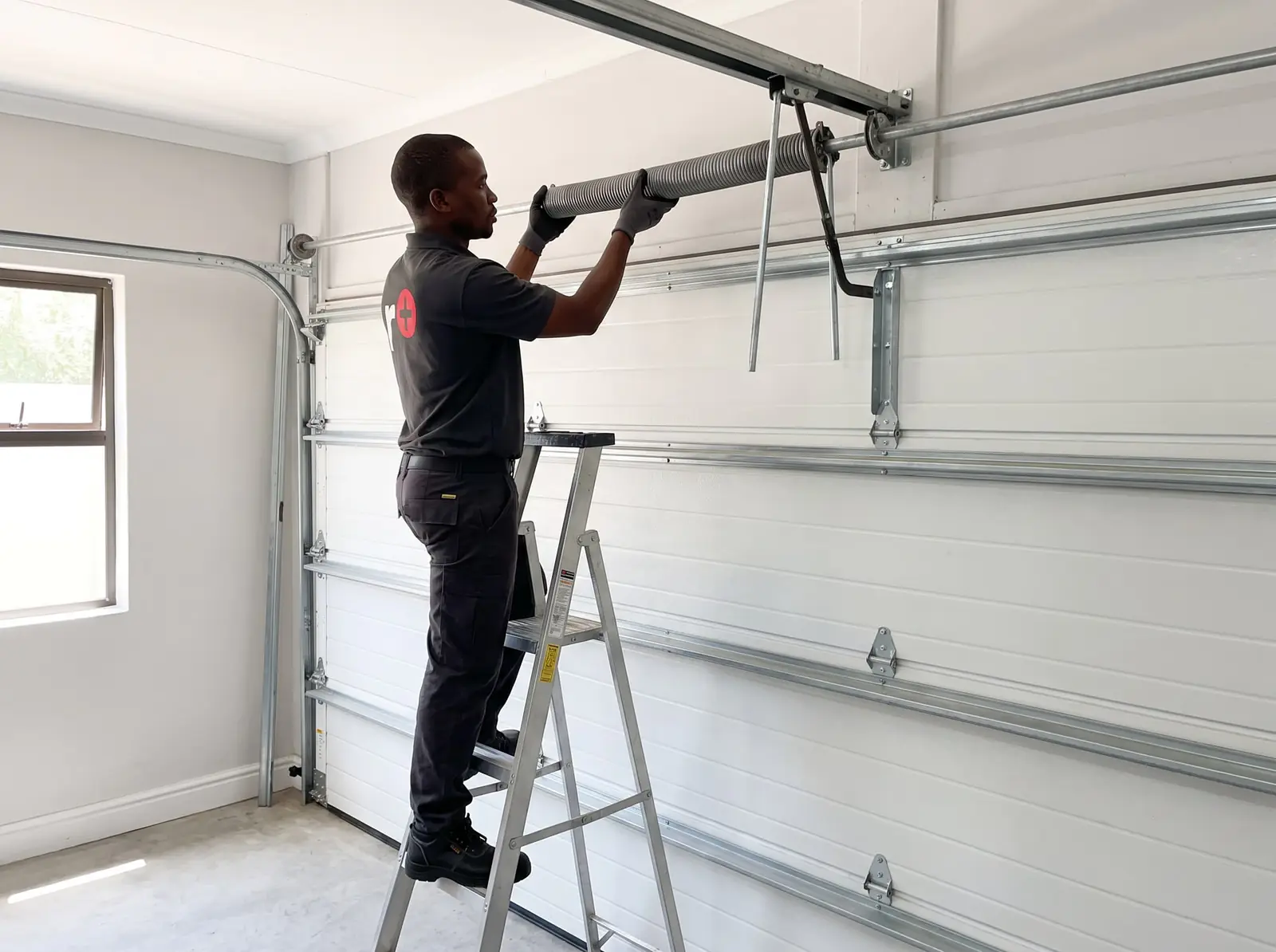
What a garage door spring does
A garage door is heavy, and its springs are wound or stretched so that they carry almost all of that weight. Digidoor's manual describes the result: when a properly balanced door is moved by hand and left at any point in its travel, it stays there, supported entirely by its springs.
That's why a door with healthy springs feels light, and why a motor isn't meant to make up for a heavy door. The same manual is plain about the order of things: most complaints about how a garage door runs can be traced to the door itself, and a motor is not meant to correct a door that's unbalanced or binding.
So a weak or broken spring shows up as a motor problem first. The door stops partway, reverses, or the motor hums and the door doesn't move, because the motor feels a door far heavier than it should be.
Torsion and tension springs: which does your door have?
The kind of door decides the kind of spring:
| Door | Spring | Where to look |
|---|---|---|
| Roll-up | Torsion springs, which twist | On the shaft above the opening that the door rolls around |
| Sectional | Counterbalance springs, typically torsion springs | On a bar across the top of the opening, inside the garage |
| Tip-up | Tension springs, which stretch, or counterweights | Down the sides of the frame, on the pivot arms |
A torsion spring stores its force by being twisted round a shaft; a tension spring by being stretched. Both are under heavy load all the time the door is closed, which is when the spring is working hardest.
Some tip-up doors are balanced with counterweights instead of springs, and that matters if you plan a motor: Gemini's garage operator, for one, isn't made for vertical tip-up doors balanced with weights. See garage door motor installation for which motor suits which door.
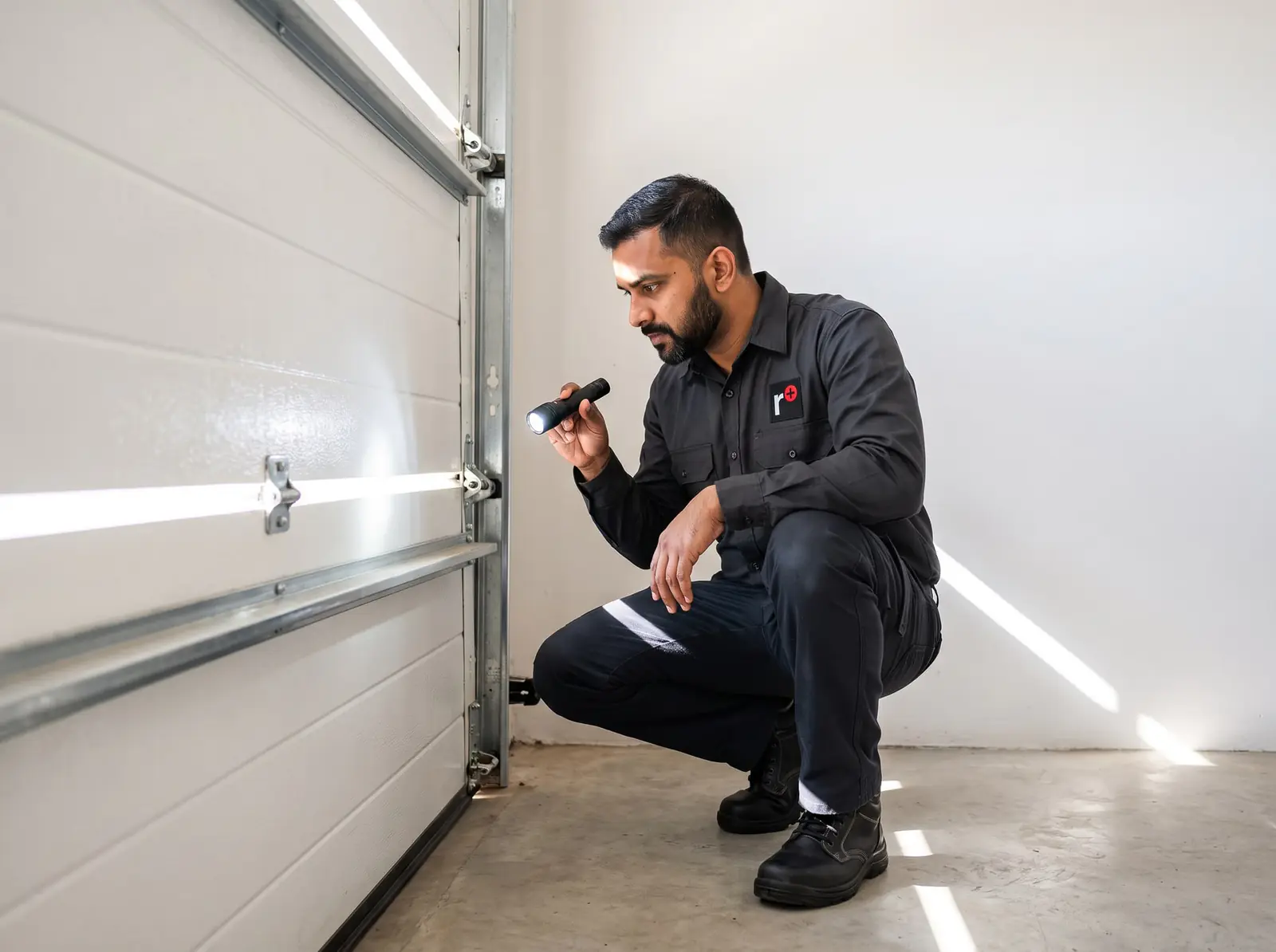
Signs a spring is failing
- The door won't stay put. A balanced door, lifted about halfway by hand and let go, stays there: Centurion allows no more than 100 mm of rise or fall. If your door drops or shoots up when you open it by hand, it's out of balance. Never pull the motor's release on an open door to find out, and if the door feels very heavy, lower it and leave it closed.
- It has become heavy. Digidoor gives 20 kg as the absolute most it should ever take to raise or lower a roll-up door; Centurion's sectional motor manual says about 10 kg.
- The motor strains, stops or reverses, especially near the bottom or top, or a newer motor warns you. Centurion's RDO Digital, for one, has a Door Service Monitor setting that flashes its light while running when the door is out of balance.
- One side lifts first, or the door runs crooked, which can point to a spring or cable on one side.
- You can see it. A torsion spring with a gap in its coils, or a tension spring that's stretched open or snapped, has failed.
A door that's getting heavier is worth a visit before it stops altogether.
Why spring work is never a DIY job
The manuals agree on this. Digidoor: garage doors, door springs, cables, pulleys, brackets and hardware are under extreme force and can cause serious injury, and spring adjustment can be dangerous. ET: if the balancing springs need adjusting, only a qualified and experienced person should do it. Centurion: repairs to the garage door must be done by technically qualified people.
The danger isn't only in the spring itself. ET and Digidoor both warn that with a damaged, broken or fatigued spring, an open door can drop the moment the motor's manual release is pulled. So if a spring breaks:
- If the door is closed, leave it closed. Don't pull the release and don't keep pressing the remote.
- If the door is open, keep everyone and the car out from under it, and don't pull the release. Call us and say it's open.
- Stop using the motor. Digidoor's and Gemini's manuals both say not to use the motor when the door needs repair or adjustment, because a fault in the installation or a door that's out of balance can cause injury.
A photo of the springs and the motor, sent on WhatsApp or with the job card, helps us bring the right spring.
What spring replacement involves
A replacement spring has to match the door. Springs are made for a door's weight and height: shop listings for Digidoor roll-up torsion springs, for example, are sold by a weight range and a door height, such as 70 to 90 kg for a 2,135 mm door. The wrong spring leaves the door just as unbalanced as a broken one.
The job, done properly:
- The door is secured so it can't move while the old spring's tension is released with the right tools.
- The new spring is fitted and tensioned to the door's weight.
- The balance is tested: lifted halfway and let go, the door stays put.
- The cables, drums and brackets are checked, since they carry the same load.
- The springs are greased. Centurion's manuals call for heavy bearing grease between the coils, because dry, rusty springs add friction and seasonal temperature changes alter it, both of which can make a motor malfunction.
- The motor is reset. Centurion's RDO Digital manual says that once a door has been rebalanced, the motor's forces and limits must be learnt again.
All our spare parts are genuine, and every repair carries our six-month guarantee on our repairs.
Cables, drums and mountings
Springs work with cables, drums, pulleys and brackets, and the manuals group them together: Digidoor's Digi 7 manual asks owners to check cables, springs and mountings often for wear, damage or imbalance, and not to use the door if repair or adjustment is needed. A frayed cable, a cable that has jumped off its drum, or a bracket pulling out of the wall is as urgent as a broken spring, and is best dealt with at the same visit.
Making springs last
Springs weaken with use, which is why the manuals talk about weak and fatigued springs as well as broken ones. Three habits from the manufacturers help them last:
- Keep them greased. Digidoor wants torsion springs greased; Centurion specifies heavy bearing grease between all the coils.
- Have the door serviced regularly. Digidoor's advice for a long-lived motor is a regular garage door service, with the springs checked and adjusted when needed.
- Test the safety reverse each month. Centurion asks for the motor's obstruction reversing to be checked monthly: the door should reverse when it meets something.
What spring work typically costs
Typical South African prices, from installer price lists, cost guides and shop listings:
| Job or part | Typical price |
|---|---|
| Spring replacement, fitted | R1 400–R3 200 (published price lists of Gauteng installers) |
| Spring, cable or motor component repair | R1 200–R4 000 (Handld) |
| Cable replacement | R700–R1 600 (published price lists of Gauteng installers) |
| Garage door service | R650–R950 (published price lists of Gauteng installers) |
| Torsion spring alone (Digidoor, 70–90 kg rating, 2,135 mm) | about R890–R1 140 per spring (NeonSales) |
| ET wide-door balance spring alone | about R900 (NeonSales) |
These are market prices, not ours. Prices checked October 2026. Your exact price is set in a free quote before any work starts. No call-out fee when we do the work. If no work is done, a R650 call-out fee applies.
Areas
Garage door spring repairs by area
- Garage doors · Alberton
- Garage doors · Bedfordview
- Garage doors · Benoni
- Garage doors · Bryanston
- Garage doors · Centurion
- Garage doors · Douglasdale
- Garage doors · East Rand
- Garage doors · Edenvale
- Garage doors · Fourways
- Garage doors · Hyde Park
- Garage doors · Inanda
- Garage doors · Johannesburg
- Garage doors · Kyalami
- Garage doors · Melrose Arch
- Garage doors · Midrand
- Garage doors · Morningside
- Garage doors · Randburg
- Garage doors · Roodepoort
- Garage doors · Rosebank
- Garage doors · Sandton
- Garage doors · Saxonworld
Questions
Garage door spring questions
What does a garage door spring do?
It carries the door's weight. The springs are wound or stretched so a balanced door stays wherever you leave it, which is why it feels light and why the motor only has to guide it. When a spring breaks, the door weighs what it really weighs. Read what springs do.
What garage door spring do I need?
One matched to your door's type, weight and height: torsion springs for roll-up and most sectional doors, tension springs for many tip-up doors. Springs are sold by weight range and door height, so a technician sizes the replacement on site. See what replacement involves.
How much does it cost to replace a torsion spring in a garage door?
Installer price lists put a fitted spring at R1 400–R3 200, and Digidoor roll-up torsion springs alone sell for about R890–R1 140 per spring in shops. Prices checked October 2026. See the price table.
Can I fix my garage door spring myself?
No. The manufacturers' manuals warn that springs and their hardware are under extreme force and that adjustment or repair is for a qualified person. A broken spring can also make an open door drop when the release is pulled. Leave the door as it is and call us. Read why.
Do garage door springs wear out?
Yes. They weaken with use, which is why the manuals warn about weak and fatigued springs as well as broken ones. Greasing and a regular door service help, and a door that's getting heavier is the sign a spring is going. See how to make springs last.
Can you repair a garage door spring?
A broken or tired spring is replaced rather than repaired, with one matched to the door's weight and height. What can be repaired around it are the cables, drums and brackets, which are checked at the same time. See what replacement involves.
Book a technician
Get a garage door quote
Job card
We WhatsApp or call you back. Fields marked (required) are needed.