Guides · Garage doors
How to open a garage door manually
Every garage door motor has a release, usually a cord with a handle, that disconnects it from the door so you can open the door by hand in a power cut or a breakdown. It's simple, but it has one danger worth knowing first. Here's how to do it safely, put the motor back, and lock a door that's stuck open.
24/7 emergency repairs across Gauteng
Six-month guarantee on our repairs
First: is the door safe to release?
Releasing the motor hands the door's weight to its springs, and if a spring or cable is broken, the door is suddenly very heavy. ET warns that a door with a damaged, broken or fatigued spring can plummet when it's released.
Before you pull anything:
- Listen back. A loud bang from the garage recently, with nobody using the door, often means a spring has broken.
- Look up. A gap in the coils of a spring above the door, or a slack or frayed cable at a bottom corner, means stop.
- Is the door closed? Release it with the door fully closed wherever you can. Centurion's advice for any other position is to make sure no one and nothing is near or under the door first.
If anything points to a broken spring, leave the door where it is, keep everyone clear, and call us.
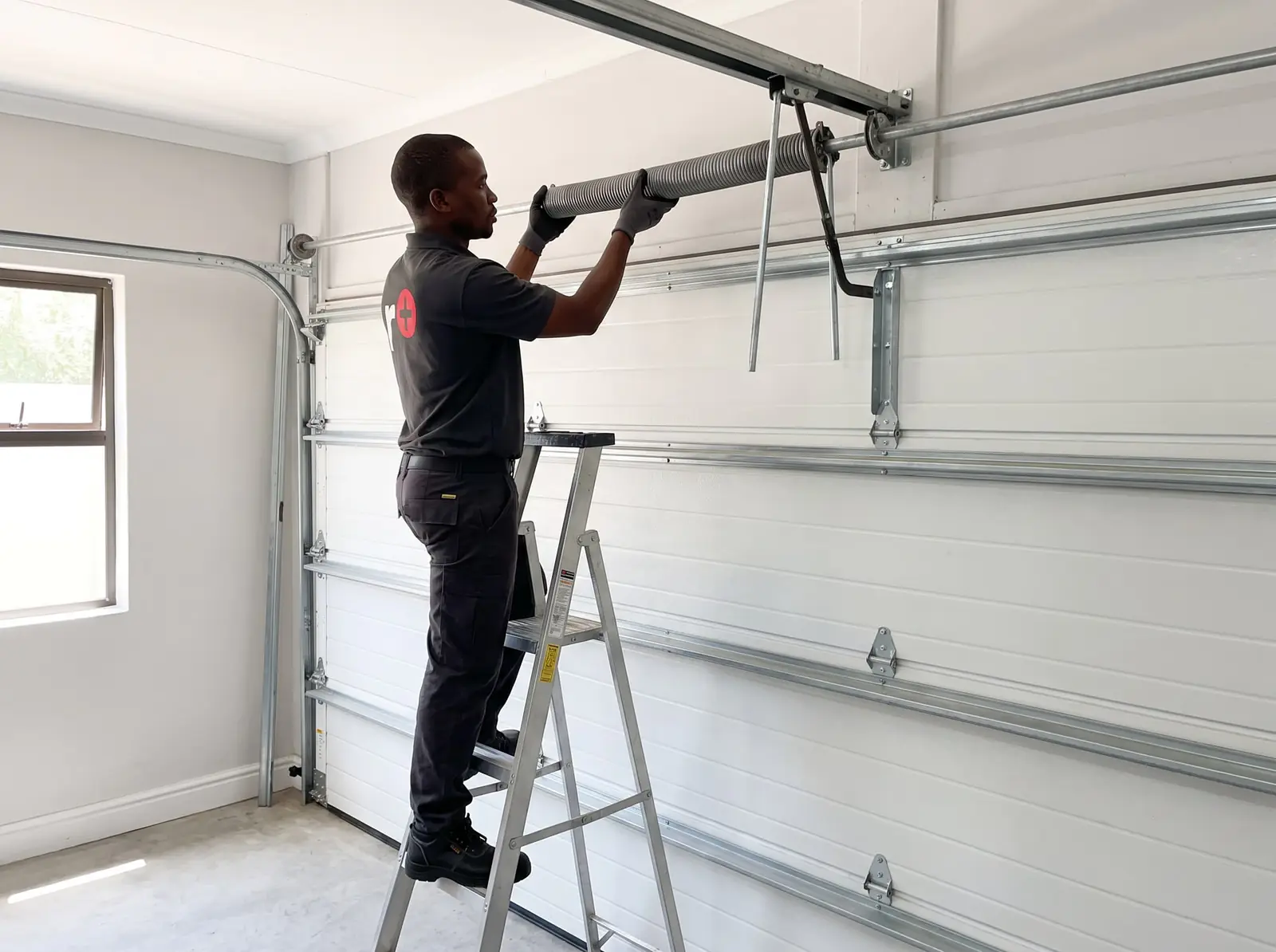
No power? It may not need releasing
Many garage motors carry on during a power cut on their batteries. Centurion's SDO4, for example, gives 12 to 30 operations on battery, depending on the door and the batteries. If your door still runs from the remote in a power cut, use it; release it only when the motor can't move it.
Releasing the motor
The release hangs from the part that runs along the motor's rail, usually at about 1.8 m from the floor so anyone can reach it.
- Centurion SDO4: pull the release handle down until it clicks. The door is now free of the motor.
- ET DC Blue Advanced: pull the emergency cord down and, while holding it, move the door open or closed by hand.
- Centurion RDO II (roll-up doors): pull the red release cord down once.
Then lift the door by hand, using its handle or the bottom edge, never the release cord. Centurion is explicit about this on both its sectional and roll-up motors: the cord is a release, not a handle, and pulling the door with it can cause serious injury. A balanced door should lift with moderate effort and stay roughly where you leave it.
If it's too heavy to lift
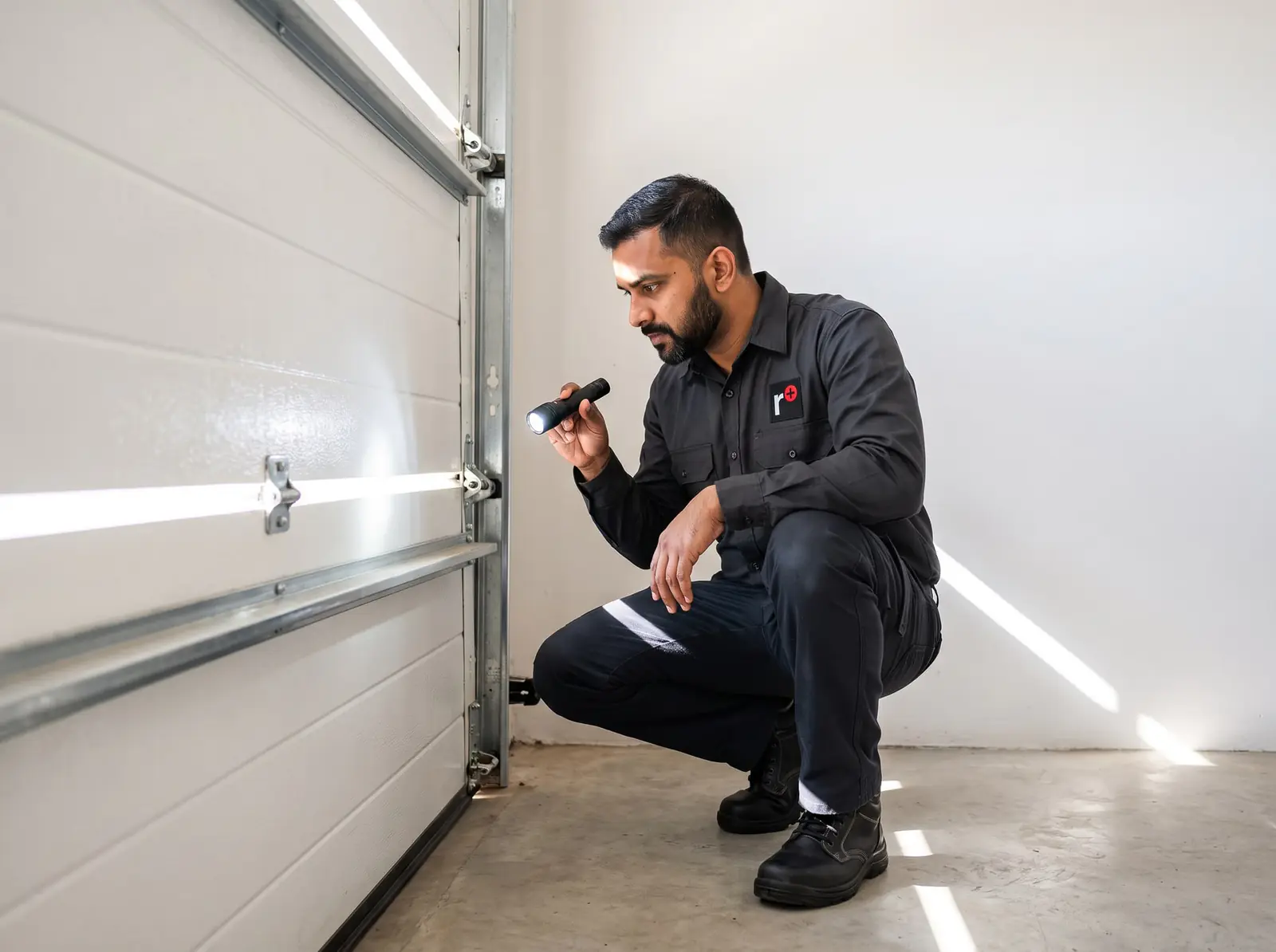
A door that feels far too heavy, or that starts to drop when you let go, is out of balance, and usually that means a spring or cable has failed. Lower it gently back down, keep clear of it, and don't try to prop it open. Garage door springs and cables hold the door's weight under great tension, and adjusting or replacing them is never a home job; see garage door springs.
Putting the motor back
- Centurion SDO4: pull the release handle back towards the motor until it clicks, then move the door by hand until the carriage engages the chain and locks on.
- ET DC Blue Advanced: let the cord go, then move the door until the traveller locks back onto the drive.
- Centurion RDO II: pull the red release cord down once more.
Then run the door once with the remote and watch it through a full open and close.
Locking a door that failed open
If the motor fails with the door open, the house is open too. Centurion's SDO4 has an emergency lock for exactly this: release the motor, lower the door a little by hand, re-engage the motor, lower the door until it's fully closed, then lift on it to check it's locked. The engaged motor holds the door shut.
If the door can't be closed safely, or it won't lock, it's an emergency for us: the 24/7 emergency repairs across Gauteng cover a garage door stuck open at night.
When the garage is the only way in
The release is inside the garage, so it can't help you from the driveway. If your garage is the only way into the house, it's worth thinking about before the next power cut: make sure the motor's batteries are healthy, know where your other keys are, and ask us about the options for your door. Our guide to a garage door that won't open covers the faults behind a stuck door.
Show everyone at home
A release is only useful if the people at home know it's there and how it works. Show every adult who uses the garage where the cord hangs, how to tell whether the door is safe to release, and how to put the motor back. Keep children away from the cord and the door while it moves, and make sure nobody ever treats the cord as a handle.
Getting it fixed
On the job card, give the door type and the motor's make, whether the door is open or closed now, and whether you suspect a spring; tick "It's urgent" if the house can't be secured. Same-day repairs are offered when the day allows. No call-out fee when we do the work. If no work is done, a R650 call-out fee applies. The gate equivalent is in how to open a gate manually.
Questions
Questions about opening a garage door by hand
How do I open my garage door manually?
Pull the motor's release cord or handle, ideally with the door closed, then lift the door by hand, never by the cord. Re-engage the motor afterwards. Read the steps.
Can I open my garage door manually with a broken spring?
Don't: with a broken spring the door is very heavy and can drop suddenly once released. Leave it closed, keep clear and call us. Read why.
Can a garage door open without power?
Yes: many motors run on their batteries in a power cut, and every motor has a release so the door can be opened by hand. Read more.
How do I reconnect my garage door to the motor?
On a Centurion SDO4, pull the release handle back towards the motor until it clicks, then move the door until the carriage locks onto the chain. Read more.
Book a technician
Get a garage door quote
Job card
We WhatsApp or call you back. Fields marked (required) are needed.