Gate motors · Anti-theft
Gate motor anti-theft brackets, cages and alarms
A sliding gate motor sits at the edge of the property, and a thief who can get the cover off can take the motor, its battery or its board. An anti-theft bracket or cage locks the motor down so that takes tools and time, and an anti-lift bracket stops the gate itself being lifted off. Here is what the makers offer for each type of motor, how Centurion's cage for its SMART range goes on, and the alarms that warn you someone is trying.
Six-month guarantee on our repairs
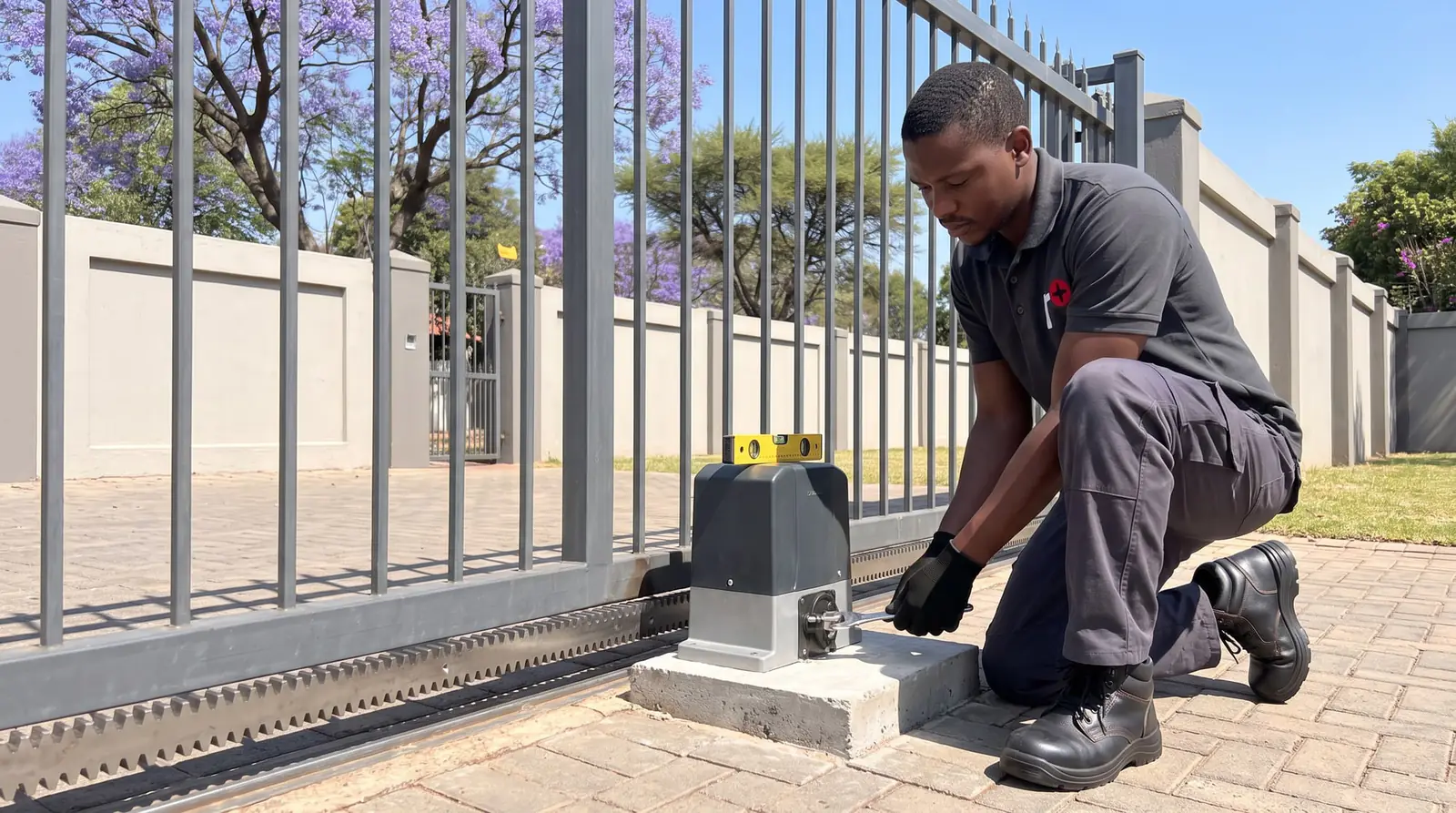
Bracket, cage or lock: what each one stops
Three different things get called "anti-theft", and they protect against different attacks:
- A theft-resistant cage or bracket wraps or bolts over the motor so the cover can't be lifted and the motor can't be unbolted from its base without first cutting the cage. Centurion makes steel cages for its D-series sliders and the A10.
- An anti-lift bracket stops the gate itself being lifted off the motor's pinion and pushed open by hand. Centurion's installation manuals tell installers to fit them to prevent unauthorised access.
- A padlock on the arm or lever is the swing-gate and older-motor version: it secures the joint or release that would otherwise free the gate.
Most gates need two of these: something on the motor, and an anti-lift bracket on the gate.
Centurion's SMART cage: D3, D5-Evo and D6 SMART
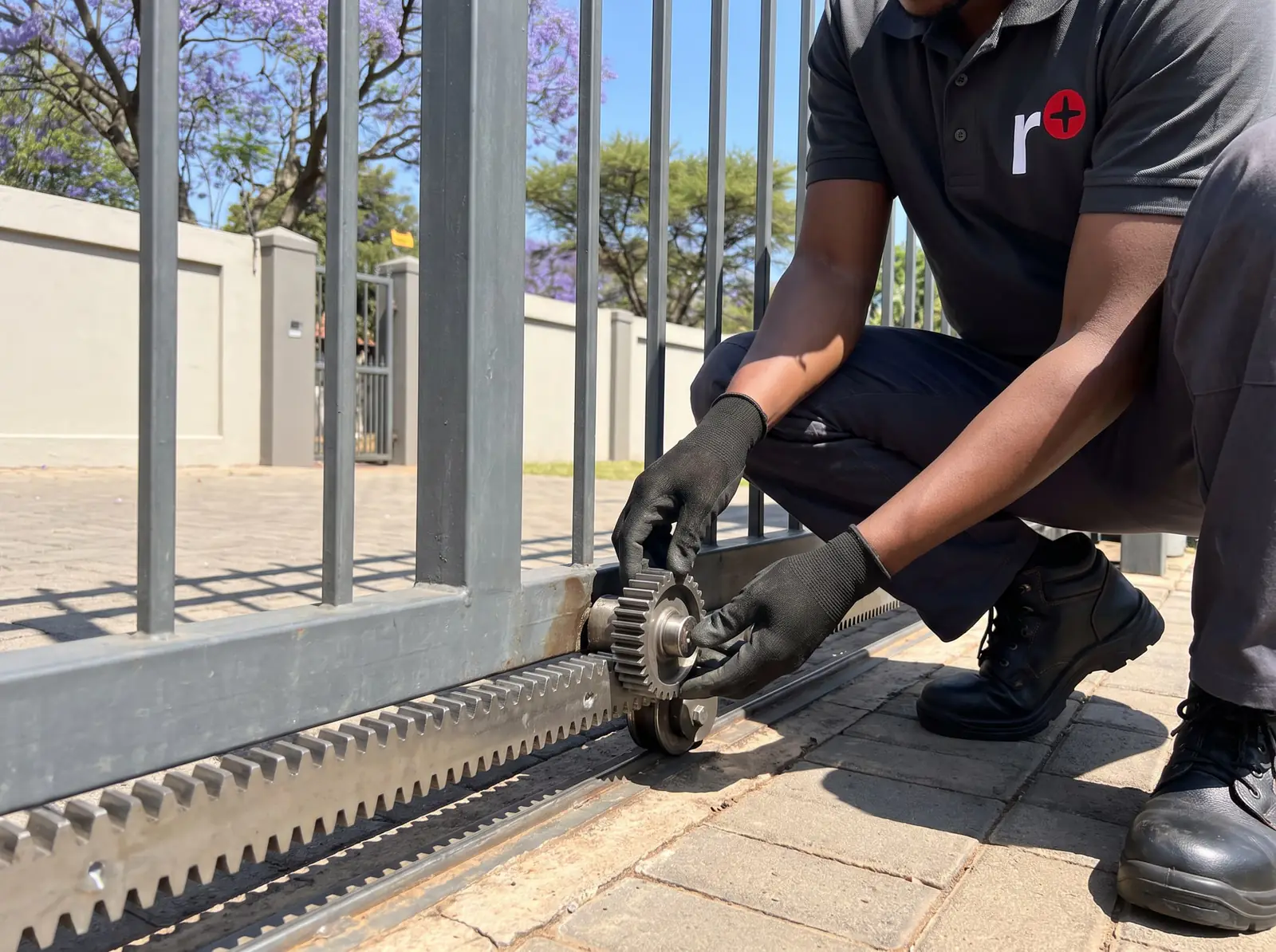
Centurion makes one theft-deterrent cage for its D3 SMART, D5-Evo SMART and D6 SMART. It comes as five parts: a steel overstrap that goes over the motor, three support brackets that sit inside the gearbox (marked L1, L2 and R1, each with its own position), a front bar assembly, and a discus padlock with its key.
How it's fitted, from Centurion's installation manual:
- On an existing motor, take off the cover, the battery (two on a D6), the charger and the lower battery tray, and keep them somewhere safe.
- Remove the three lock nuts, spring washers, top height adjusters and the earth lug.
- Place the three support brackets into the gearbox, each in its own position and the right way round.
- Refit the lock nuts, washers, height adjusters and earth lug, reassemble the motor and refit its cover.
- Push the two gearbox plugs into the gearbox, one on each side, and place the overstrap over the motor.
- With the padlock unlocked, line up the overstrap's holes with the gearbox's and push the front bar all the way through both, until it shows out the back. Centurion warns that forcing it can damage the gearbox housing.
- Lock the front bar, take out the key and keep it safe.
If the motor uses the optional magnet origin system, Centurion says to move the gate magnet as close as possible to the motor cover and set the limits again. On a new installation, the brackets go in during the motor's installation, before its lock nuts.
Centurion's own wording is that the cage is designed to significantly reduce the risk of an intruder getting to the motor, and that it can't be held liable for a motor that is tampered with. It makes theft much harder, not impossible.
Cages for the D5-Evo, D10 and A10
Centurion's manuals for the D5-Evo (and the D5-Evo Low-Voltage), the D10 and D10 Turbo, and the A10 each describe an optional steel theft-resistant cage, for the same reason. Two practical points from them:
- Leave room for it. The installation manuals ask for extra side clearance where a cage will be fitted: an additional 20 mm each side of the motor's lower cover on the D10 and A10, and the D10's dimension drawing gives 340 mm with the cage fitted. On a narrow driveway beside a pillar, that decides where the motor can go, so it's worth planning before the motor is mounted.
- Check the rack. Centurion notes that where a cage is needed, the rack layout should leave enough clearance from pillars and walls.
A cage fitted after the fact sometimes means moving the motor a little; we check the clearance before quoting.
Anti-lift brackets: keeping the gate on its pinion
A sliding gate sits on its wheels and is held upright by guide rollers at the top. Lift it, and the rack comes off the motor's pinion: the gate can then be pushed open by hand, however well the motor itself is locked. An anti-lift bracket is a steel bracket fixed so the gate can't rise.
Centurion's rule is precise: the gap between the anti-lift bracket and the gate must be less than 5 mm, and the gate must not be able to lift off the pinion with the bracket fitted. Its manuals also note that mounting the rack in certain positions acts as a very effective anti-lift bracket in itself.
Check yours: with the motor engaged, try lifting the gate near the motor. If it rises enough to free the rack from the pinion, the bracket is missing, bent or set too high.
Swing gates and older motors: padlocks
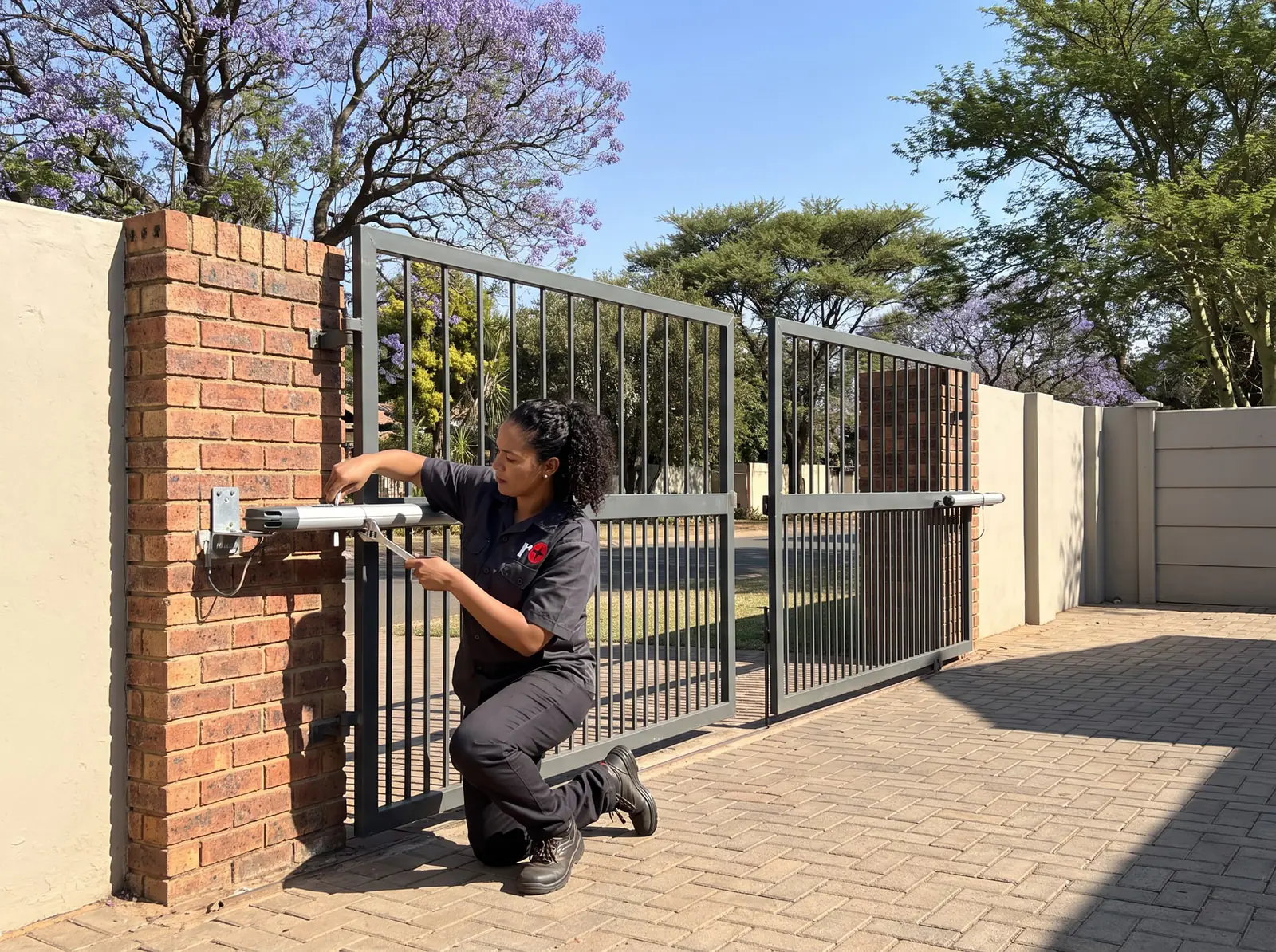
- Centurion Vantage: each arm is held on its gate bracket by a snap ring, and Centurion suggests adding a padlock and its optional padlock shield. It also says never to fit a swing motor on the outside of the gate, where the public can reach it. See the Vantage manual.
- Centurion Vector2: an optional high-security kit adds padlocks and a high-security wall bracket.
- Centurion R3 and R5: the linkage hardware comes with a padlock and key.
- Gemini's older AC slider: its manual-override lever has a lug for a padlock.
On any motor, the release key is part of security too. Keep it somewhere you can find it, but not on a hook by the gate.
Alarms that warn you first
A cage slows a thief down; an alarm tells you it's happening. Several motors have them built in:
- ET's Drive series monitors for tampering. If the safety beams are triggered for more than 20 seconds while the gate is closed, an alarm output switches on, usually wired to a light or a zone on the house alarm; the Drive range also reports a gate being lifted, and the Drive 500, 600 and 1000 a gate kept open too long. ET's advice if that warning light is on when you arrive: don't open the gate, but drive on to your nearest armed response point or police station and ask for an escort in.
- Centurion's SMART+ range offers tamper, break-in and ambush alarms, which Centurion's handover checklist recommends showing every owner, with notifications in the MyCentsys Remote app.
- Centurion's D5-Evo has break-in and ambush alarms on its buzzer: see the D5-Evo manual.
A GSM module such as Centurion's G-ULTRA can send gate and power alerts to your phone on older motors.
The gate guards the driveway, but it can't guard a car that has to stand outside it: in the street while a broken gate waits for repair, or in a driveway the road can see. For the car, early-warning vehicle tracking does what a tamper alarm does for the motor, raising the alarm while a theft is starting rather than after the car is gone.
Having one fitted
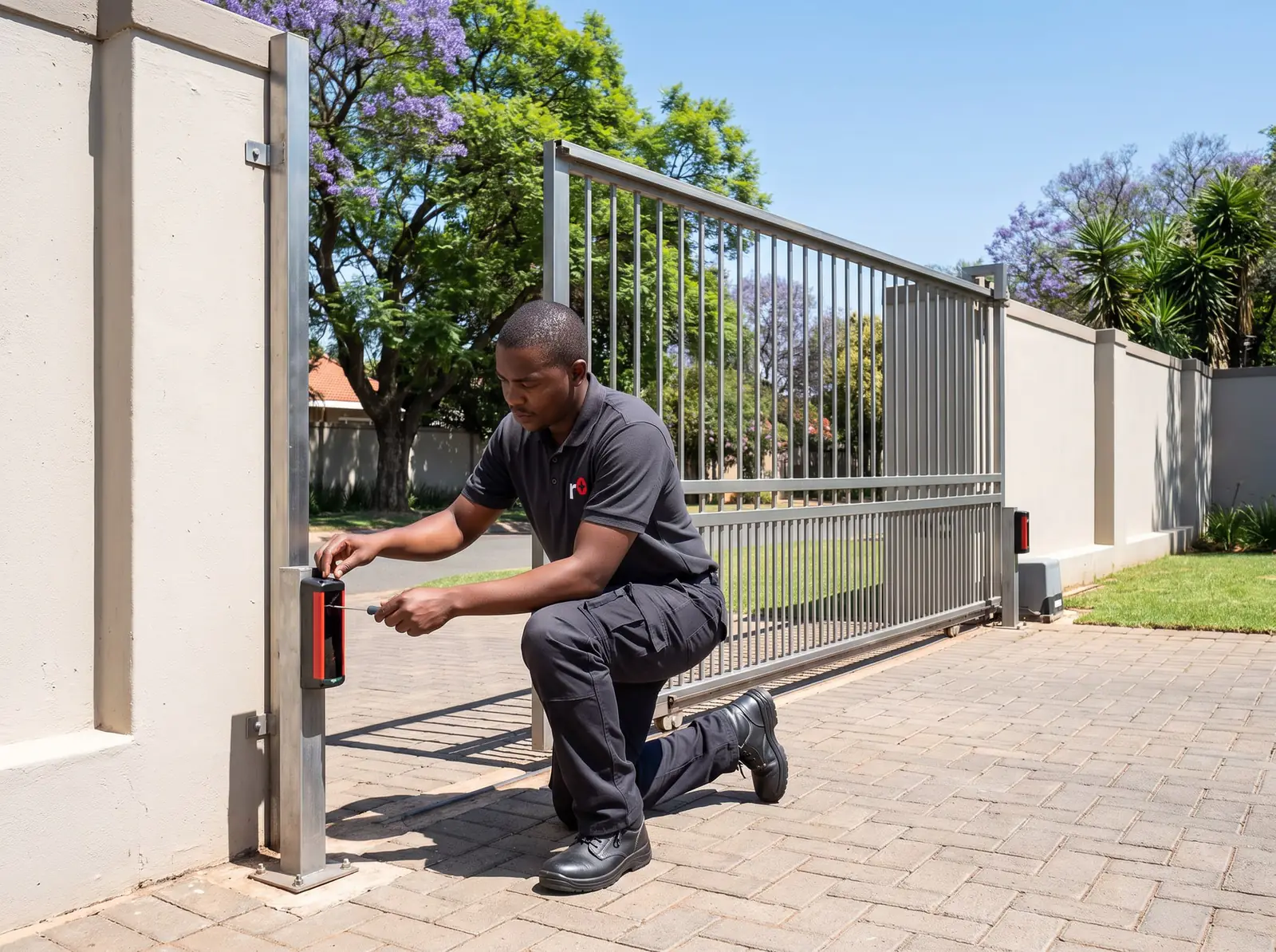
We fit Centurion's SMART cage and theft-resistant cages, anti-lift brackets and padlocks, set limits again where a cage means moving the origin magnet, and wire up tamper and break-in alarms. For ET, Gemini and other makes, what fits depends on the motor and the site, so we quote after seeing it. If a motor has already been stolen or broken into, we replace it and protect the new one in the same visit.
All our spare parts are genuine, and every repair carries our six-month guarantee on our repairs. Your exact price is set in a free quote before any work starts. No call-out fee when we do the work. If no work is done, a R650 call-out fee applies.
Centurion's fitting instructions for the SMART cage: Centurion D3/D5/D6 SMART theft-deterrent cage, installer manual.
Questions
Anti-theft questions
What is an anti-theft lock?
On a gate motor, it's the padlock that secures an anti-theft cage or bracket, or the arm of a swing motor, so the motor can't be removed without cutting it. On Centurion's SMART cage it's a discus padlock locking a steel bar through the gearbox. See the SMART cage.
Book a technician
Get a gate motor quote
Job card
We WhatsApp or call you back. Fields marked (required) are needed.