Fencing · Palisade gates
Palisade gates: driveway and pedestrian gates, motors and locks
A palisade gate is the busiest part of a palisade fence: it's opened every day, carries its own weight on a hinge or a track, and is the first thing anyone tests. We make, hang, automate and repair palisade gates for driveways and pedestrian entrances across Johannesburg, the East Rand and Centurion. Here's how to choose one, what fits on it and what it typically costs.
Six-month guarantee on our repairs
1-year guarantee on every motor kit we supply and install
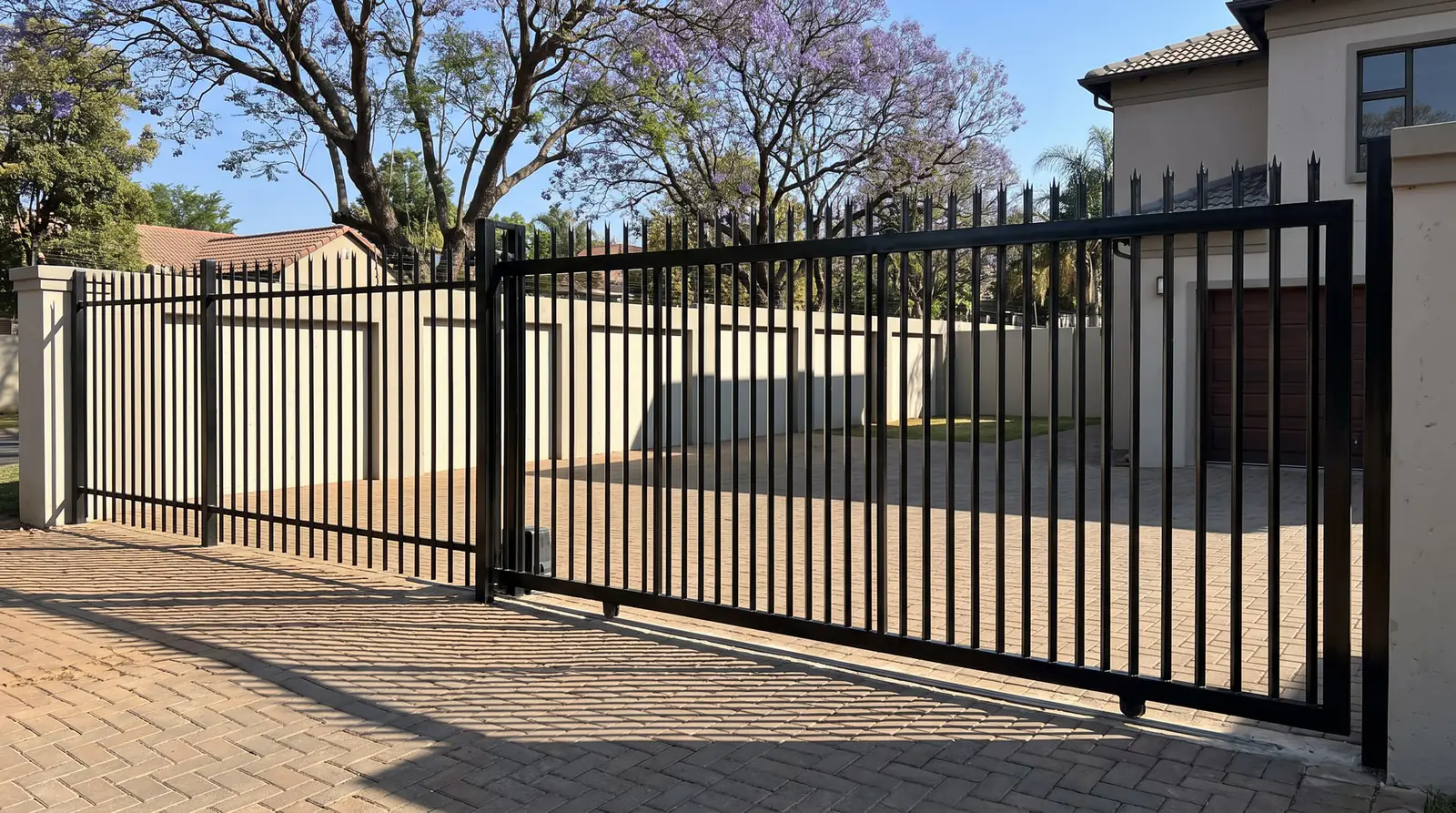
Driveway and pedestrian palisade gates
Most properties with a palisade fence need two gates:
- A driveway gate for cars, usually sliding along a track or swinging on hinges, and nearly always worth automating.
- A pedestrian gate beside it, for people on foot, deliveries and the times the motor is off, with a lock that opens from both sides or a striker lock released from the house.
The two are made from the same palisade pales as the fence, so the boundary looks like one piece, and set in posts or pillars that are heavier than the fence's own, because a gate puts its weight and every knock on the posts that hold it.
Sliding or swing?
A sliding gate runs on wheels along a track in front of the opening and needs space beside it along the fence to slide into. It's the usual choice in Gauteng: it doesn't need room in front of the gate, it isn't pushed open by the wind, and it suits a driveway that slopes up to the street.
A swing gate opens on hinges, as one leaf or two. It needs a clear, fairly level arc behind the opening, but no space along the fence. It suits a short boundary, a pillared entrance or a driveway where there's no room for a gate to slide.
On a sloping driveway, a swing gate can scrape the ground as it opens, which is one more reason most palisade driveway gates here slide. Our sliding gates and swing gates pages cover the motors for each.
Designs and sizes
Palisade gates follow the fence they're in, with a few choices of their own:
- The tops of the pales: pointed single or triple spikes, the same as the fence, so the gate isn't the easy way over.
- The frame: a solid frame top and bottom, with a diagonal brace on a wider swing leaf so it doesn't drop at the far end.
- Infill at the bottom: mesh or closer pales low down, where dogs and small children could slip through.
- The finish: galvanised, painted or both, matched to the fence.
There's no single standard size, because every opening is different: we measure the width of the driveway, the space to slide or swing into, the slope and the height of the fence before the gate is made, so it fits the opening rather than the other way round.
Hinges, locks, latches and drop bolts
- Hinges on a swing gate carry its whole weight. Heavy-duty weld-on or adjustable hinges stop the leaf dropping and dragging.
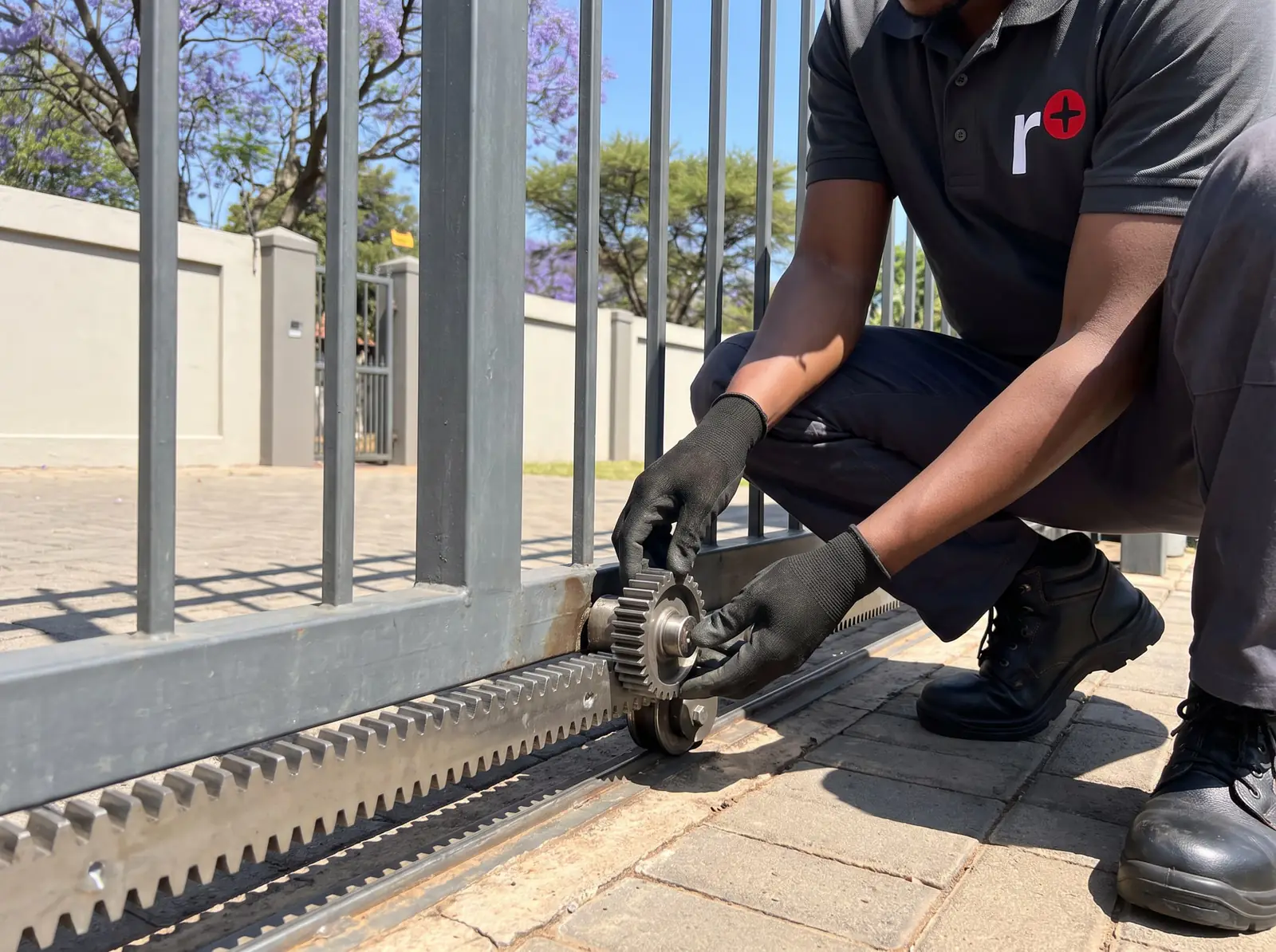
- Wheels and track on a sliding gate are where most wear happens. A track kept clean and level, and wheels with good bearings, keep the gate easy for a motor to move.
- Guide rollers at the top of a sliding gate hold it upright, and an end stop stops it running off the track.
- Locks and latches on a pedestrian gate: a lock box welded into the frame, a padlock hasp, or a striker lock that the intercom or a button releases.
- Drop bolts hold one leaf of a double swing gate in the ground while the other is opened, and anchor a manual gate when it's shut.
Worn hinges, flat wheels and a bent track are among the most common palisade gate repairs we do.
Fitting a gate motor to a palisade gate
A palisade driveway gate takes a gate motor like any other steel gate, as long as it runs freely by hand first. Before fitting a motor we check:
- The gate moves easily along its whole travel, without catching, lifting off the track or dragging on the ground.
- The weight and length, so the motor is strong enough for the gate. A heavy gate on an underpowered motor wears it out quickly.
- The rack or the arm mount: a sliding gate needs a straight rack welded or bolted along its length for the motor's pinion; a swing gate needs solid points for the arms.
- Power and a battery at the motor, so the gate opens through load shedding.
- Safety beams across the opening, so the gate stops for a car or a person.
We fit Centurion, ET, Gemini and Nice/Hansa motors, and can add an intercom at the same time. See gate motor installation and repairs for the motors themselves.
What palisade gates typically cost
Typical figures in the South African market:
- Steel pedestrian gate: R2 500–R6 000 (Completo)
- Automating an existing sliding gate, motor and labour together: R6 500–R12 000 (Kandua)
- Installation labour, sliding gate motor: R1 500–R3 000 (Kandua)
- Safety beams supplied and fitted: R750–R1 500 (Kandua)
- Extra remotes: R150–R400 each (Kandua)
These are the market's figures, not ours. Prices checked October 2026. A driveway palisade gate itself depends on its width, height, frame and whether it slides or swings, so it's priced once the opening is measured. Your exact price is set in a free quote before any work starts. No call-out fee when we do the work. If no work is done, a R650 call-out fee applies.
Palisade gate repairs
- A gate that drags or has dropped: worn hinges or wheels, a bent frame or a post that has moved.
- A sliding gate that jumps the track: a bent or loose track, missing guide rollers or a worn end stop.
- A gate the motor struggles with: usually the gate, not the motor: we free it up before blaming the motor.
- Broken locks, latches and drop bolts, and pales bent by a car.
- Rust at the bottom rail and the welds, treated before it spreads.
Every repair carries our six-month guarantee on our repairs. If the gate motor itself is at fault, see gate motor repair costs.
Getting a quote
We measure the opening, look at the slope, the posts and the space beside or behind the gate, and quote for the gate, its hardware and a motor if you want one, in writing. 6 months warranty on equipment we install. Free quote: no call-out fee when we do the work. If no work is done, a R650 call-out fee applies. No call-out fee when we do the work. If no work is done, a R650 call-out fee applies.
For the fence on either side, see steel palisade fencing and palisade fencing prices.
Questions
Questions about Palisade gates
How much is a palisade gate?
A steel pedestrian gate is typically R2,500 to R6,000 in the market; a driveway gate depends on its width, height and whether it slides or swings, so it's priced once the opening is measured, and automating a sliding gate adds about R6,500 to R12,000. See typical costs.
Should a palisade driveway gate slide or swing?
Sliding suits most Gauteng driveways because it needs no space in front of the gate and copes with a slope; a swing gate suits a short boundary with a level, clear arc behind it. Compare sliding and swing.
What lock should a palisade pedestrian gate have?
A lock box welded into the frame or a padlock hasp for a manual gate, or a striker lock that the intercom or a button in the house releases. See hinges and locks.
Why does my palisade gate keep coming off its track?
Usually the track is bent or loose, the guide rollers at the top are worn or missing, or the end stop has failed. Don't keep forcing it back on; have the track and rollers put right. See repairs.
Book a technician
Get a palisade fencing quote
Job card
We WhatsApp or call you back. Fields marked (required) are needed.