Intercoms · Wireless
Wireless intercom systems for your gate
A wireless intercom talks from the gate to a handset in the house by radio, so there's no cable to bury under a paved driveway or a lawn. The catch is range: walls, trees and distance all eat into it. Here's when wireless is the right choice, how far the systems we install really reach, and what goes wrong with them.
Six-month guarantee on our repairs
10 years of experience in gate motor installation and repairs
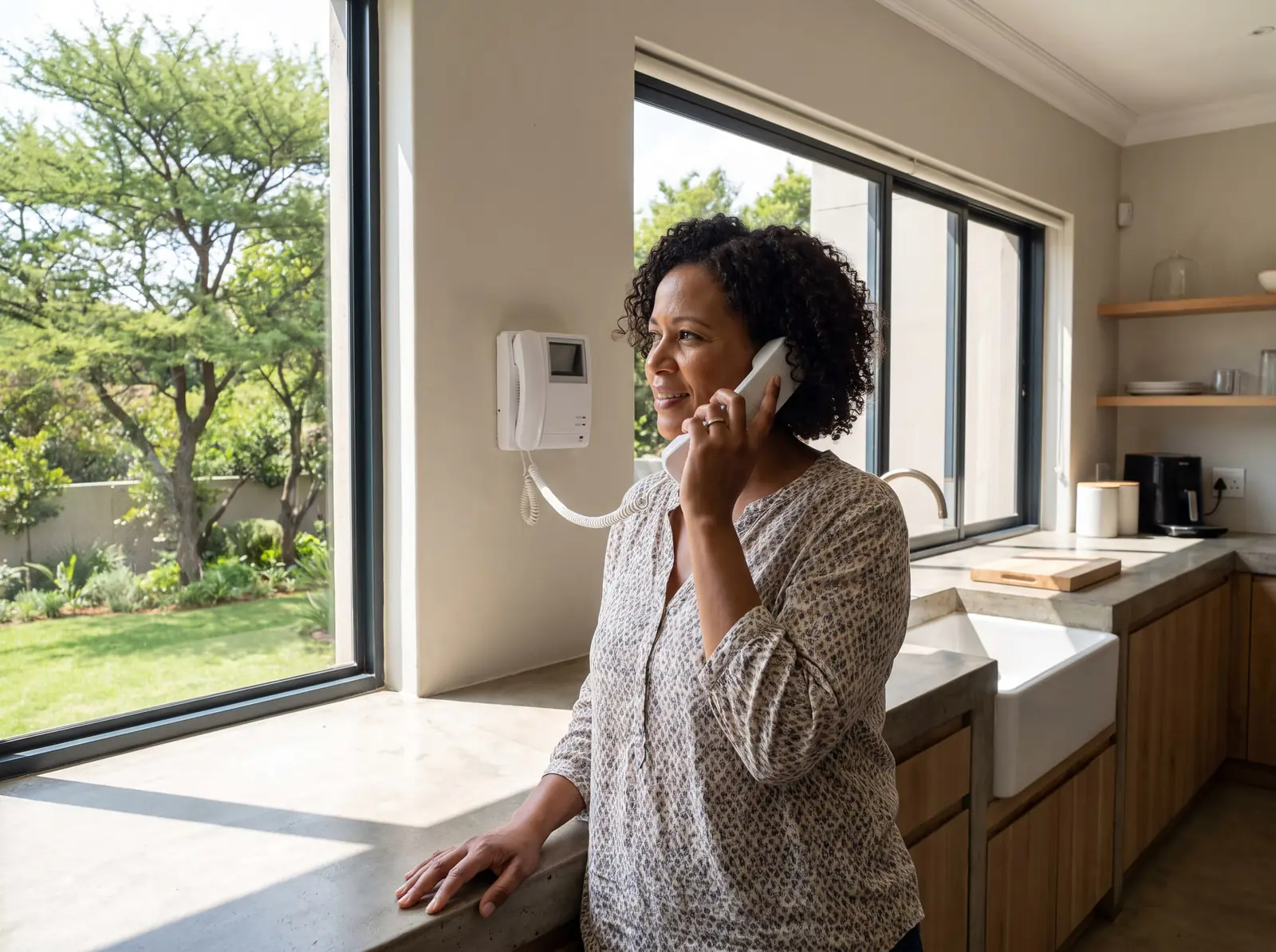
When wireless beats a cable
A wired intercom is still the most dependable choice when a cable is already in the ground. Wireless earns its place when it isn't:
- The driveway has been paved or the garden landscaped since the house was built, and lifting it costs more than the intercom.
- The old cable has been cut by digging or damaged by a lightning surge, and replacing it means a trench.
- The house is a moderate distance from the gate, too far for a cheap run of cable to be practical but within radio range.
- You want a handset you can carry, from the kitchen to the garden or the study.
- You rent, and want something you can take with you.
Where the house is very far from the gate or the signal has to pass through several walls, a GSM intercom that calls your phone is often the better answer.
How far they really reach
Every maker quotes range with a caveat, because buildings, trees, slopes and other radios all reduce it. The figures in Zartek's own manuals for the systems we install:
- ZA-660-A, a one-button gate station with a portable handset: 50 to 70 m in built-up areas, and further in the open.
- CDP808, a multi-house system with up to 80 channels: 100 m in built-up areas and 350 m in open areas.
- ZA620, a radio intercom on licence-free channels: 300 to 800 m in built-up areas and 1 to 4 km in open, flat country.
So a ZA-660-A suits a typical suburban home where the handset is in the house and the gate is at the end of the driveway, while the ZA620 is built for plots, farms, factories and receiving bays where distances are measured in hundreds of metres. The ZA620 can take an external antenna on an 8 m cable for extra reach.
Before we install, we test the link from the spots where you'll actually use the handset, not just from the front door. Range also changes over time: a new carport, a boundary wall built higher, a tree that has filled out or a neighbour's new radio equipment can all shorten it. If a system that used to work now crackles at the edge of the house, that is usually why, and moving the gate station's antenna, adding an external antenna where the system takes one, or choosing a longer-range system solves it. Metal is the biggest obstacle of all, so a gate station mounted on a steel gate or inside a steel post needs its antenna kept clear.
Handsets, gate stations and the gate motor
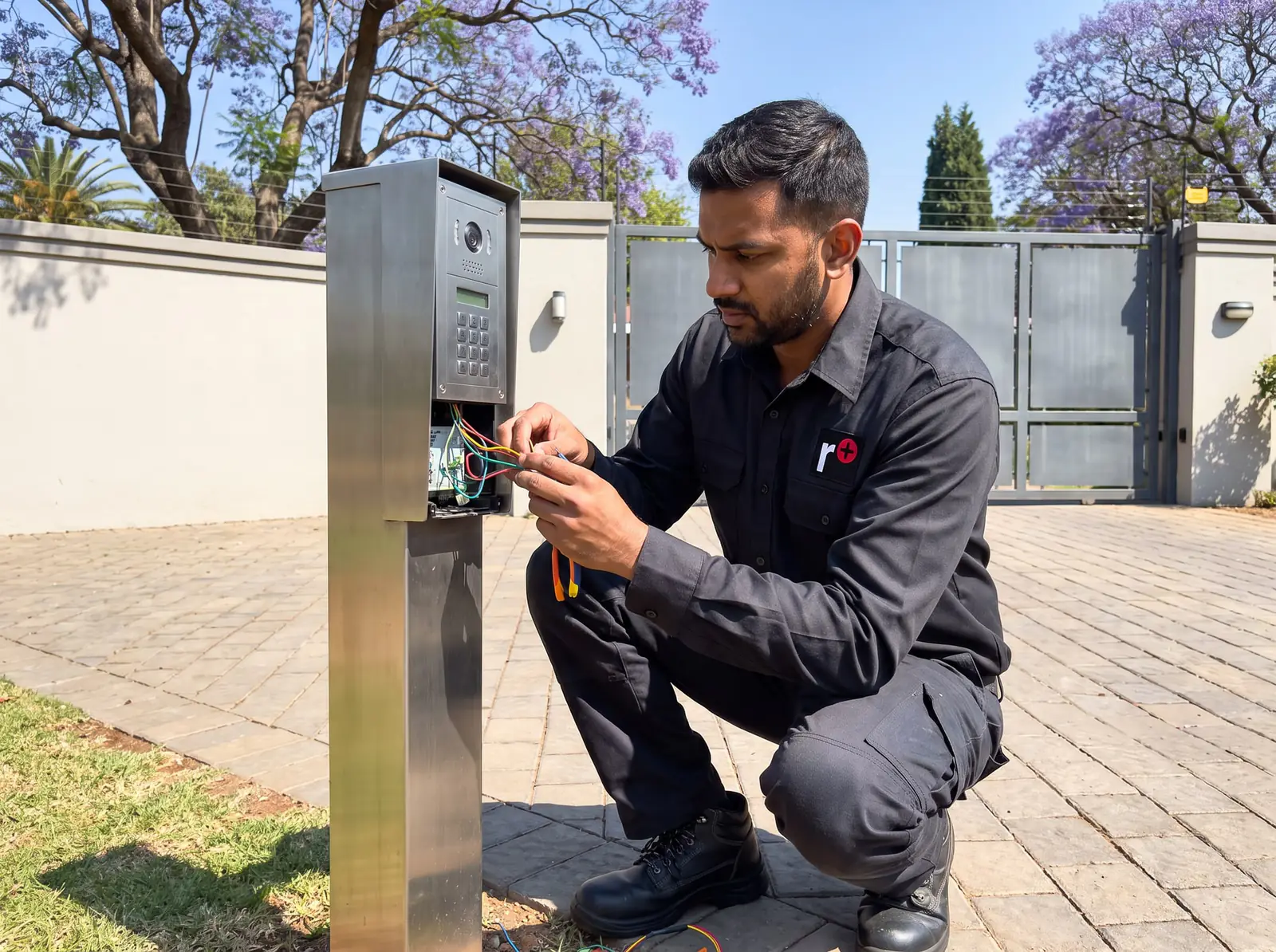
- The gate station has a call button, a speaker and a microphone, and is powered from the gate motor's supply or its own adaptor.
- The handset is portable on most systems, with a rechargeable battery and a charging cradle, and a push-to-talk button so you can answer and talk.
- More handsets: the ZA-660-A gate station can be linked to as many handsets or extra gate stations as needed, so the main bedroom, the kitchen and the cottage can all answer.
- Opening the gate: a button on the handset sends a signal that triggers the gate motor or a striker lock on a pedestrian gate. The CDP808 has two triggers, so it can open both.
- Multi-house use: on the CDP808, each house has its own channel, and only the called house's handset rings, which makes it useful for a few houses sharing one gate.
Power and load shedding
A wireless intercom needs power at both ends. The handset runs on its rechargeable battery and lives on its charger; the gate station needs a supply at the gate. On the ZA620, a backup battery takes over automatically when the mains supply fails, and on other systems the gate station is often powered from the gate motor's own battery so it keeps working through load shedding.
The most common wireless fault we see is simply a handset battery that no longer holds a charge, followed by a gate station that lost power after a surge. Both are quick to put right.
Faults we repair
- The handset doesn't ring: a flat or failed battery, a handset that has lost its pairing, or a gate station without power.
- Crackling or cutting out: the handset is near the edge of its range, or something new, a wall, a carport or a tree, is in the way.
- It rings but won't open the gate: the trigger connection at the gate motor, or the motor's input.
- One handset works and another doesn't: that handset's battery or pairing.
- The gate station has been damaged by weather or vandalism.
All our spare parts are genuine, and every repair carries our six-month guarantee on our repairs. Zartek's own setup and pairing are explained on the Zartek wireless intercom manual.
What a wireless intercom typically costs
- Basic audio intercom, installed: R2 500–R5 000 (Kandua)
- Intercom added during a gate motor installation: R2 000–R5 000 (published price lists of Gauteng installers)
- Commax 1-to-1 audio kit, in shops, for comparison with a wired kit: about R680 (Takealot)
These are the market's figures, not ours. Prices checked October 2026. A wireless system usually costs more than a wired kit in the box, and less once the trench a cable would need is counted. Your exact price is set in a free quote before any work starts. No call-out fee when we do the work. If no work is done, a R650 call-out fee applies.
Getting a wireless intercom installed
We visit, test the signal from the gate to where you'll use the handset, suggest the system that will reach, mount the gate station, connect it to your gate motor and pair the handsets. 6 months warranty on equipment we install. No call-out fee when we do the work. If no work is done, a R650 call-out fee applies.
Not sure whether to go wired, wireless or GSM? See wired vs wireless vs GSM intercoms.
Fault finder
What is your intercom doing?
Pick what you're seeing for the likely causes, the safe checks you can do yourself, and when to stop and book. Taken from the manufacturers' own manuals.
What's it doing?
Likely causes
Intercom · the handset can't reach the gate unit
Most likely first
No power to the gate (caller) unit.
The handset's battery has run down.
Too far apart, or a lot of steel in between.
The handset and gate unit have lost their pairing.
Safe checks you can do
When to stop and book
Re-pairing a system or moving a unit for better range is a quick job on the visit.
From the official manuals: Zartek ZA654 manual, Zartek ZA660A manual.
Questions
Questions about Wireless intercoms
How to connect wireless intercom?
The gate station is mounted at the gate, powered and wired to the gate motor's trigger; the handsets are charged and paired to the gate station as the maker's manual describes. We do the wiring and pairing and test the range from where you'll answer. See the parts.
How to install wireless intercom system?
Test the signal first, then mount the gate station where visitors can reach it, give it power, connect its trigger to the gate motor, and pair the handsets. Mains and the gate motor's wiring are best left to an installer. Book an installation.
How far does a wireless intercom reach?
It depends on the system and what's in the way: Zartek quotes 50 to 70 m in built-up areas for the ZA-660-A, 100 m for the CDP808 and 300 to 800 m for the ZA620 radio intercom, with more in open country. See the ranges.
Why does my wireless intercom handset keep cutting out?
Usually the handset is near the limit of its range, or something new is blocking the signal; a battery that no longer holds a charge does the same. Try answering closer to the gate, then book a check. See faults we repair.
Book a technician
Get an intercom quote
Job card
We WhatsApp or call you back. Fields marked (required) are needed.