Guides · Electric fencing
How to test an electric fence alarm, energizer and battery safely
You can't see whether an electric fence is working, and touching it to find out is a bad idea. The good news is that a modern energizer tests itself: it measures the voltage on the fence with every pulse, can run its own battery and siren tests, and shows the results on its display or keypad. Here's how to use those to test your fence and its alarm safely, and what a technician does on top.
2-year warranty and a compliance certificate on every new electric fence we install
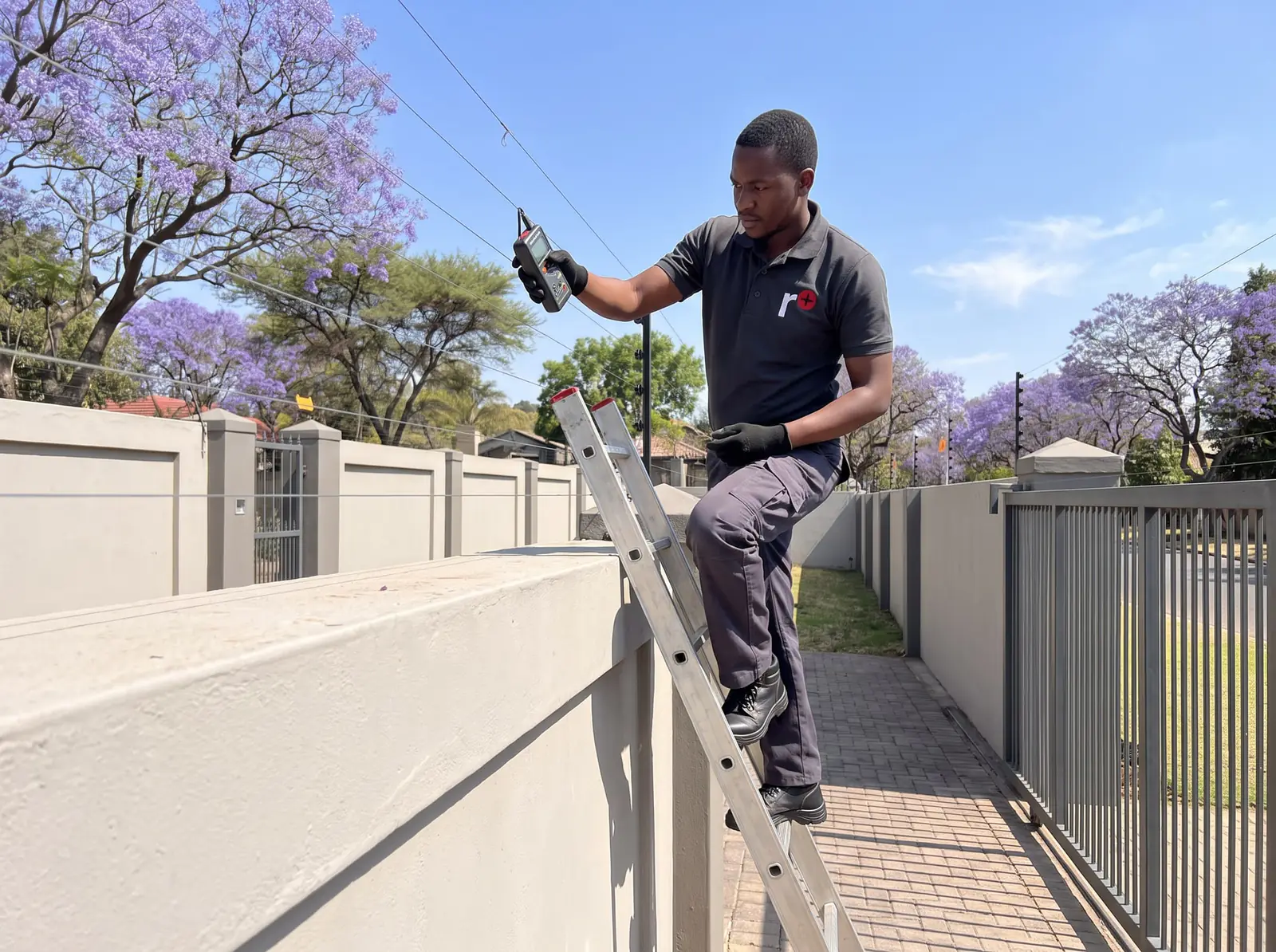
Never test it by touching it
Don't test a fence with your hand, a blade of grass, a screwdriver held against the wires, or anything else that puts you or a tool in the pulse's path. A security energizer delivers a powerful shock; a screwdriver bridging a live wire to an earth wire can also arc, damage the wires and, at best, tells you only that one strand was live at one point. The makers' own commissioning tests use an electric fence voltmeter or power probe, designed for the fence's high-voltage pulses, which is a technician's tool.
Test 1: read the fence voltage from the keypad
Your energizer measures the fence every second or so. Ask it what it sees:
- Nemtek Druid: on the keypad, 6 1 # shows the voltage going out and coming back, 6 2 # the energy stored and how hard the energizer is working, 6 3 # the percentage lost along the fence, and 6 4 # the battery voltage. 6 0 # puts the normal display back.
- JVA with a 4-line keypad: each energizer's screen shows its fence voltages, and \* 6 7 # shows the stored joules.
- Older units with lights: a steady GOOD light, or a slowly flashing fence light, is your reading.
A good fence shows a strong return voltage, close to what goes out. JVA's commissioning guideline is more than 5.0 kV between the wires all along the fence. A big gap between out and return means power is leaking somewhere: see electric fence low voltage.
Test 2: the alarm, the siren and the link to armed response
- Siren test: on a JVA keypad, \* 6 3 # runs a siren test.
- Test quietly first: Nemtek's Druid and Merlin have a silent alarm mode that stops the siren and strobe but keeps the internal beeper, which the manuals suggest for periodic testing.
- Test the alarm itself: the honest test of an alarm is a real fault on the fence. Commissioning includes deliberately breaking a live wire and deliberately shorting one, and checking that both raise the alarm. That's a job for the installer, with the fence handled safely.
- Test the link: if the fence reports to your house alarm or armed response, warn the control room first, then have the fence alarm triggered and confirm they received it.
The JVA keypad's 500-entry event log, with dates and times, also shows whether alarms have been happening when you weren't home.
Test 3: the battery
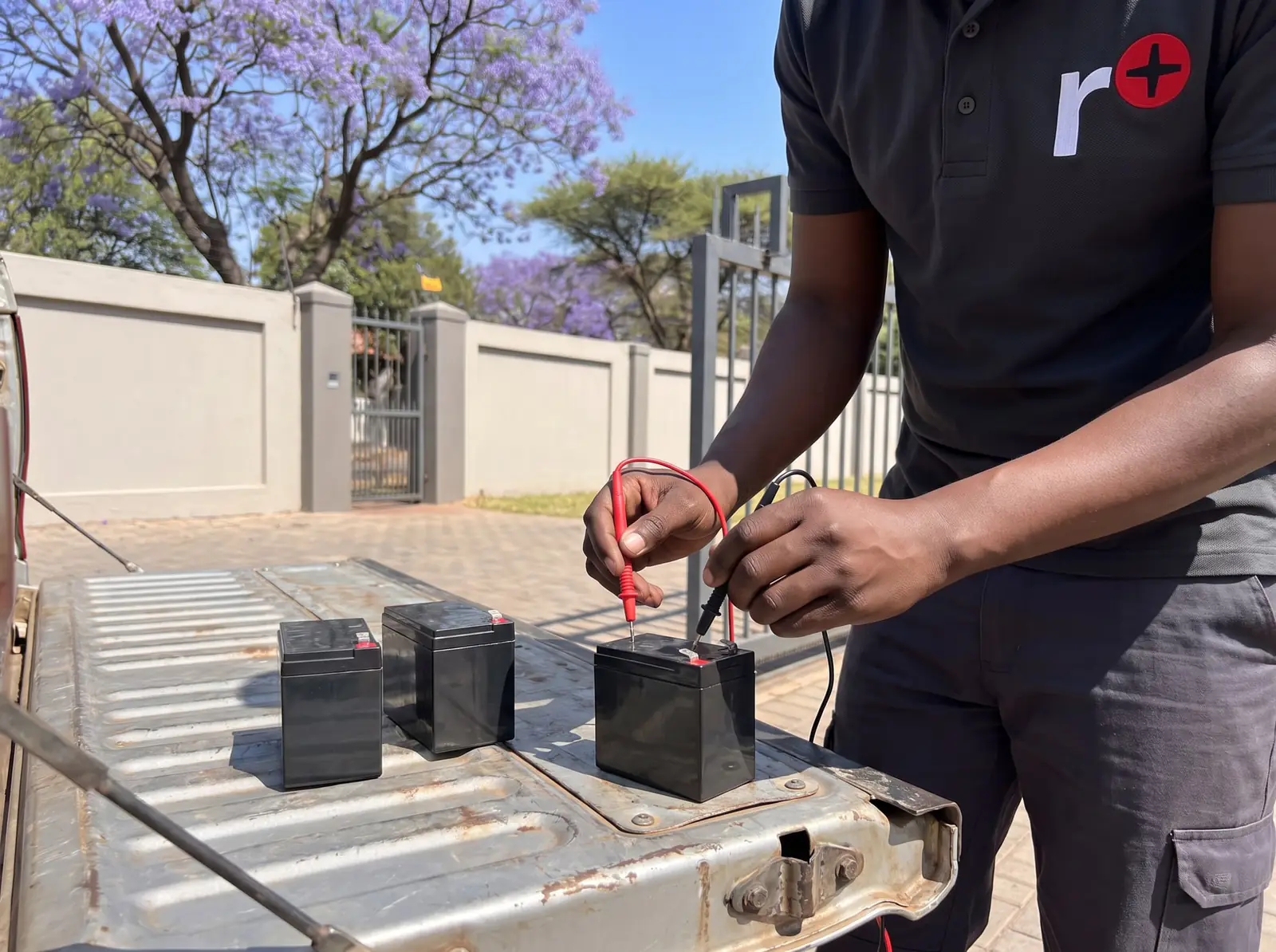
A fence that works on mains but dies in the first hour of load shedding has a battery problem, and you can test for it before it happens:
- Nemtek Merlin: master PIN, then \* 6 #. The keypad beeps four times and the energizer disconnects the mains for 20 minutes while it watches the battery. If the battery service light comes on, replace the battery. Nemtek advises doing this at least twice a year.
- JVA with a 4-line keypad: \* 6 4 # runs a battery test.
- Nemtek Druid: 6 4 # shows the battery voltage.
A battery test is worth running before winter storms and after a run of long power cuts.
Test 4: walk the fence
Readings tell you something is wrong; your eyes often tell you where. From a safe distance, walk the fence and look for plants touching the wires, broken or sagging strands, cracked or blackened insulators, bent brackets, and a gate whose contact doesn't close. Do it after a storm and every few months as a matter of course. If you find something, have the fence switched off before anyone clears it.
What a technician tests
A full fence test, following the makers' commissioning procedures, covers:
- Every live strand, for voltage and continuity, with a fence voltmeter or probe.
- No shorts between live and earth wires, or between live circuits.
- The earth system: with a deliberate short, the voltage on the earth should stay low; JVA's guideline is under a few hundred volts.
- The start and end voltages, recorded, so a later drop can be spotted.
- The alarm, for a break and for a short, on each zone.
- The battery, the siren, the strobe and the gate contacts.
Where a certificate is needed, certified electric fence installer inspects the fence against the regulations. See electric fence certificate. Every repair we make after a test carries our six-month guarantee on our repairs. No call-out fee when we do the work. If no work is done, a R650 call-out fee applies.
Questions
Questions about testing an electric fence
How to test electric fence alarm?
Use the energizer's own functions: read the fence voltage on the keypad, run a siren test (on a JVA keypad, * 6 3 #) and warn your armed response before testing the link. A real test of the alarm, breaking and shorting a wire, is the installer's job. See testing the alarm.
Can I test an electric fence using a screwdriver?
No. Bridging the wires with a screwdriver puts you near the pulse, can arc and damage the wires, and tells you very little. Read the voltage on the energizer's keypad instead. Read why.
Can I test an electric fence using a multimeter?
An ordinary multimeter isn't made for a fence's high-voltage pulses; the makers' commissioning tests use an electric fence voltmeter or power probe. The energizer's own display is the safe way for an owner to read the fence. See reading the voltage.
How to test an electric fence without a tester?
Ask the energizer: most show the fence voltage or a GOOD, CHECK or BAD reading, and many keypads show the voltage going out and coming back. Then walk the line at a safe distance looking for faults. See the keypad readings.
How to test electric fence energizer?
Check its display and lights, read the out and return voltages from the keypad, and run its battery test (on a Merlin, master PIN then * 6 #). A dead display or a battery that fails the test needs a technician. See the battery test.
Book a technician
Get an electric fence quote
Job card
We WhatsApp or call you back. Fields marked (required) are needed.