Electric fencing · Certificate
Electric fence compliance certificate: when you need one and what's checked
An electric fence needs its own compliance certificate, the Electric Fence System Certificate, separate from your house's electrical certificate. It comes up when a fence is put in or changed, and when a property is sold. Certified electric fence installer, so we inspect fences across Johannesburg, the East Rand and Centurion, issue the certificate when a fence passes, and fix what's wrong when it doesn't.
2-year warranty and a compliance certificate on every new electric fence we install
Six-month guarantee on our repairs
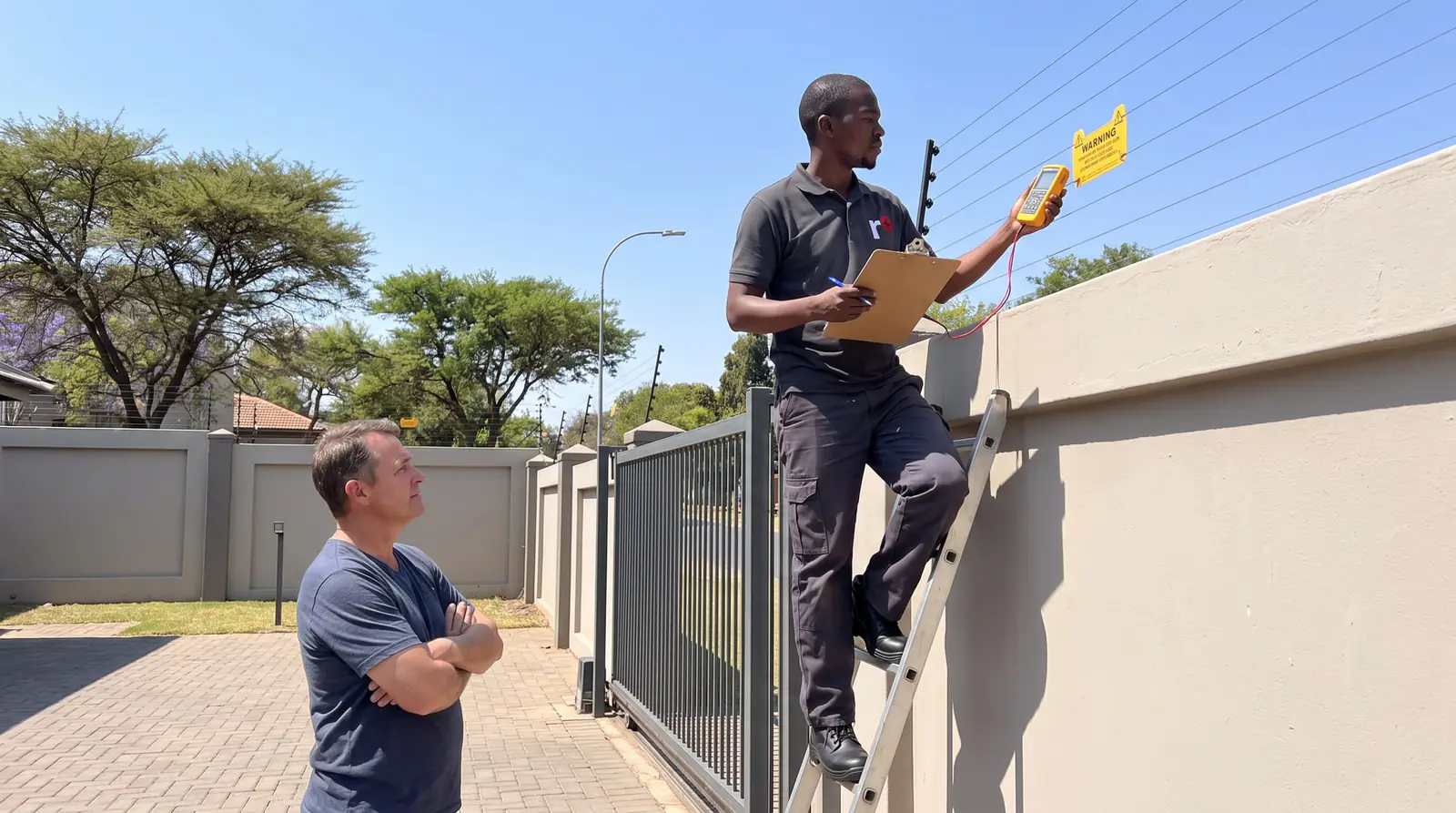
When the law requires one
Regulation 12 of the Electrical Machinery Regulations, 2011, made under the Occupational Health and Safety Act, says the user of an electric fence system must hold an Electric Fence System Certificate. It applies:
- to every fence put up since the regulations came in;
- when a fence is added to or altered, however old the rest of it is;
- when the property changes hands after 1 October 2012, even if the fence itself is older.
A fence that was up before the regulations, and hasn't been changed or sold with the property since, doesn't need one yet; the next change of ownership brings it in.
Who may issue it
Only a registered electric fence installer may issue the certificate: someone registered for it with the Department of Employment and Labour. The electrical compliance certificate for your house's wiring is a separate document from a different specialist: it doesn't cover the fence, and the fence certificate doesn't cover the wiring. When you sell, you need both.
Certified electric fence installer. Ask any installer for their registration before they sign a certificate for you: a certificate from someone who isn't registered may not be accepted at transfer.
What the inspection looks at
The inspector checks the fence against the standard requirements for electric security fences, the same ones Nemtek's and JVA's installation manuals summarise:
- The energiser. That it's a type tested to IEC 60335-2-76, and that each fence runs from one energiser only.
- Warning signs. Yellow on both sides with black lettering, at every gate and access point, no more than 10 m apart, and readable from inside and outside.
- Barbed and razor wire. None electrified, and none close enough to the live wires to trap someone.
- Gates. They open without anyone getting a shock.
- Earthing. The fence's earth spikes are in place and at least 10 m from other earth systems; the metal of a palisade or mesh barrier is earthed.
- Spacing from other fences. At least 2.5 m from a neighbour's electric fence on another energiser, unless a barrier separates them.
- The wiring. High-voltage leads in their own conduit, insulated indoors and in insulating conduit underground.
We also measure the fence voltage and test the alarm with a short and a break at the far end of each zone, as Nemtek's installer notes ask.
Why fences fail, and what happens next
These are the items that stop a fence passing:
- Signs missing, faded, too small or too far apart.
- Old razor wire left near the electric lines, or barbed wire wired into the fence.
- Earth spikes missing, corroded, or driven in next to the house's own earth.
- Two energisers feeding one fence after an extension, or a neighbour's fence too close.
- Cabling sharing a conduit with mains or alarm wiring.
- A gate that can give a shock when it's opened.
If yours doesn't pass, we give you the list of what needs fixing, and the price to fix it, in writing. You can have us do the work or use someone else; either way, the fence is re-checked before the certificate is issued.
Booking an inspection
- Tell us about the fence: where it is, roughly how long it is, how many zones it has, and whether it has been added to since it went up.
- Give us the whole fence line. On the day we need to walk every side of the property, open the gates, and reach the energiser and its keypad or remote.
- Keep it switched on. The fence is tested live, so keep pets and children inside while we work along it.
- Keep the certificate safe. A fence that passes gets its certificate for the fence as it stands: keep the original with the property's papers and give your conveyancer a copy.
Selling? Book as soon as the house goes on the market. A fence that needs repairs then has time for them, and the certificate is ready before the conveyancer asks for it.
How long a certificate lasts
The regulations give the fence certificate no expiry date: it stays valid as long as the fence is as it was when it was inspected. Add to it or alter it, by adding lines or extending it along a new wall, and it needs a new one.
At transfer, the sources differ on whether an older certificate can simply be handed to the buyer, and some sale agreements set their own age limit. Ask your conveyancer what they need before you book an inspection, so the certificate is in hand when they ask for it.
Buying? Ask to see the certificate, and check that the fence it describes is the fence in front of you: the same lines, the same energiser, the same length. A fence that has been extended or re-wired since its certificate was issued needs a new one.
What a fence certificate typically costs
Typical market prices in Gauteng, not ours:
| What | Typical price |
|---|---|
| Inspection and certificate for a fence that already complies | R850–R1 500 (Kandua, Completo) |
| Gauteng inspection fee | R900–R1 800 (Kandua) |
If the fence fails, the repairs to bring it up to standard are extra, and they're what makes the real difference to the cost. Prices checked October 2026. Your exact price is set in a free quote before any work starts. No call-out fee when we do the work. If no work is done, a R650 call-out fee applies.
New fences come with theirs
Every fence we install is handed over with its certificate, so there's nothing to arrange later. 2-year warranty and a compliance certificate on every new electric fence we install. How a new fence is planned and built is on electric fence installation, and repairs to an existing fence on electric fence repairs.
Questions
Electric fence certificate questions
Is an electric fence legal in South Africa?
Yes, as long as it's built to the standards for electric security fences and, where the regulations require it, has an Electric Fence System Certificate from a registered installer. A fence with electrified barbed wire, missing warning signs or a gate that shocks doesn't comply. See when a certificate is needed.
Who can issue an electric fence certificate?
Only a registered electric fence installer, registered with the Department of Employment and Labour. The electrical compliance certificate for the house is a different document and doesn't include the fence. See who may issue it.
Do I need an electric fence certificate to sell my house?
If the property has an electric fence, a change of ownership after 1 October 2012 requires an Electric Fence System Certificate, even for an older fence. Book the inspection early, so any repairs are done before transfer. See when it's required.
Is the electric fence certificate the same as an electrical compliance certificate?
No. The electrical certificate covers the house's wiring and comes from the person registered to certify wiring; the Electric Fence System Certificate covers the fence and comes from a registered electric fence installer. A sale with an electric fence needs both. See who issues which.
Book a technician
Get an electric fence quote
Job card
We WhatsApp or call you back. Fields marked (required) are needed.