Guides · Garage doors
How to service a garage door motor, and what (not) to grease
A garage door motor needs surprisingly little: most makers call theirs maintenance-free. The door it drives is another matter. Springs, tracks, rollers and the door's balance decide how hard the motor works and how long it lasts, and Digidoor's manual says most complaints about how a garage door runs are traced to the door itself. Here is what the makers' manuals ask for, what to grease and what never to, the checks you can safely do, and what belongs to a technician.
Six-month guarantee on our repairs
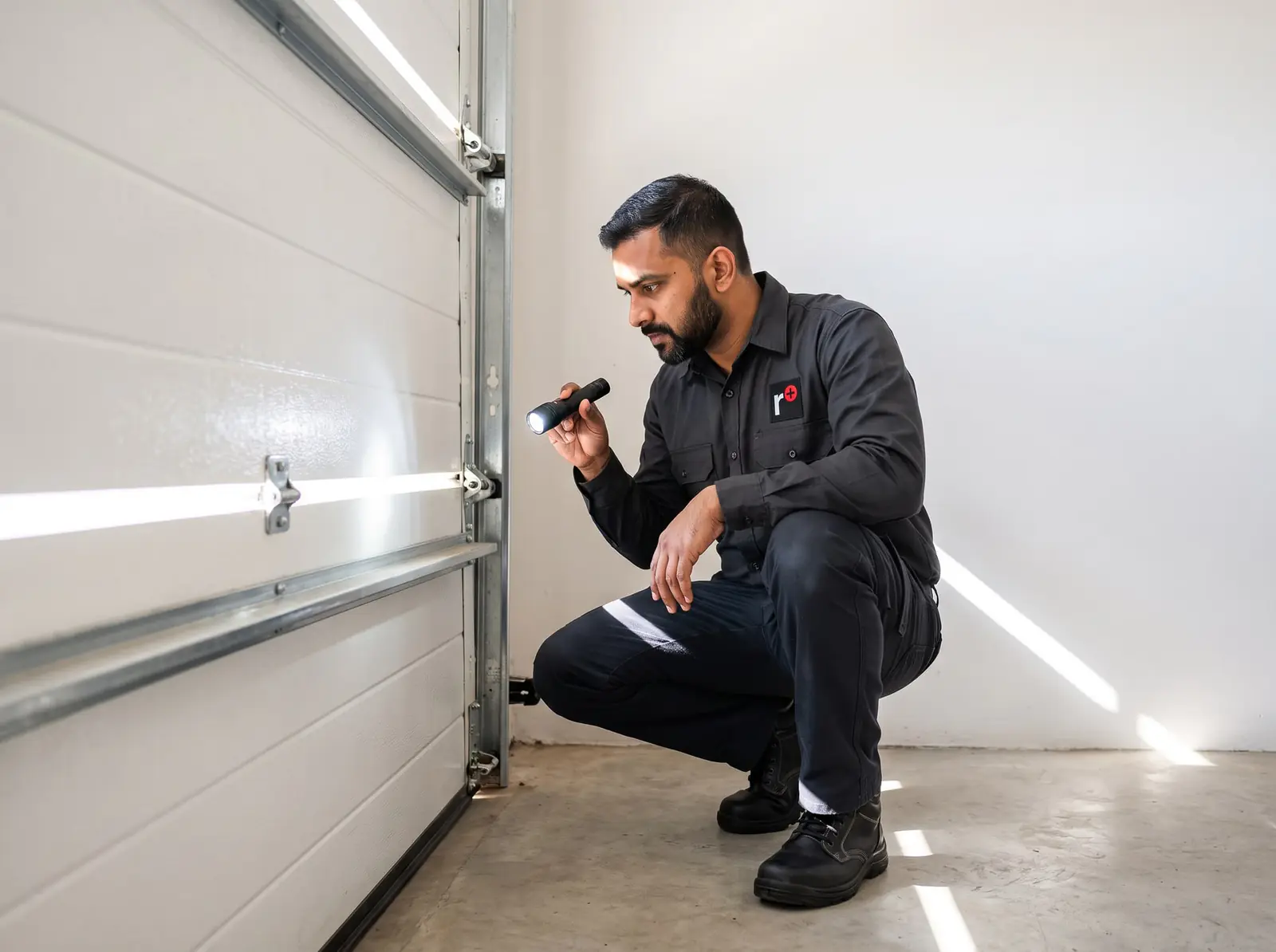
Service the door, not just the motor
The garage motor manuals we work from agree: the motor is only as good as the door. Centurion won't have its motors fitted to a door that's badly balanced, Digidoor warns that its motor isn't meant to correct an unbalanced or binding door, and Digi 6's manual adds that a badly running door shortens the motor's life.
A well-balanced door:
- takes the same effort to open as to close, and not much of it;
- stays where you leave it when you stop it partway, rising or falling no more than about 100 mm;
- runs in its tracks without sticking, rubbing or scraping.
So a proper service starts with the motor released and the door moved by hand. Everything else follows from how that feels.
What to grease, and what never to
This is where most well-meant servicing goes wrong. The makers are specific:
| Part | Grease it? | What the manuals say |
|---|---|---|
| Torsion or roll-up springs | Yes | Centurion: heavy automotive bearing grease between every coil. Digidoor: torsion springs greased |
| Tracks and channels | No | Gemini: never grease the channels or the door edges in them. ET: don't lubricate the tracks. Digidoor: tracks free of grease and dirt |
| Contact pads and strips | Dry only | Gemini: dust dry graphite on them, never grease |
| The motor and its chain | No | ET: don't lubricate the opener. Gemini calls its chain maintenance-free |
| Rollers | Not called for | None of the garage motor manuals we hold asks for grease on rollers; Digidoor says worn ones are replaced |
Why grease the springs? Centurion explains that dry springs rust, adding friction between the coils, and that seasonal temperature changes alter that friction; either can make the motor misbehave.
Why never the tracks? Grease holds dust and sand, and on a door running in its channels it builds into grit that makes the door drag. A track should be clean and dry.
Greasing the springs is part of our door service. They hold the door's weight under great force, so don't loosen, adjust or wind anything on them yourself: see why spring work is never DIY.
The checks you can do yourself
These are the owner's checks from the makers' manuals. They need no tools and nothing comes apart:
- Test the safety reverse every month. Centurion asks for it monthly, Digi 6 at least twice a year. Close the door onto something solid, ET suggests a brick or a 40 mm block on a roll-up, and check it reverses. A door that doesn't is a door that can trap a child or a car: stop using it and call us.
- Run the door by hand. Release the motor as your manual shows (with the door closed and nobody under it), then lift and lower the door. It should move smoothly, without heavy spots, and stay put when you let go halfway.
- Look at the tracks. Clean, straight and dry, with no bent sections or loose brackets. Brush out dirt and sand; Gemini suggests a stiff brush.
- Check the safety beams, if you have them: lenses clean, and the door stopping when you walk through while it closes.
- Check the limits. The door should open fully and close fully, resting on the floor.
- Test the battery. ET suggests running the door through about five full cycles with the mains off. If it struggles, the battery is near the end.
Then wash the door itself. Hydro Doors asks for a wash every three months inland (monthly at the coast) with a soft cloth and car soap: no pressure washer, no abrasive cloths and no window, bleach or solvent cleaners.
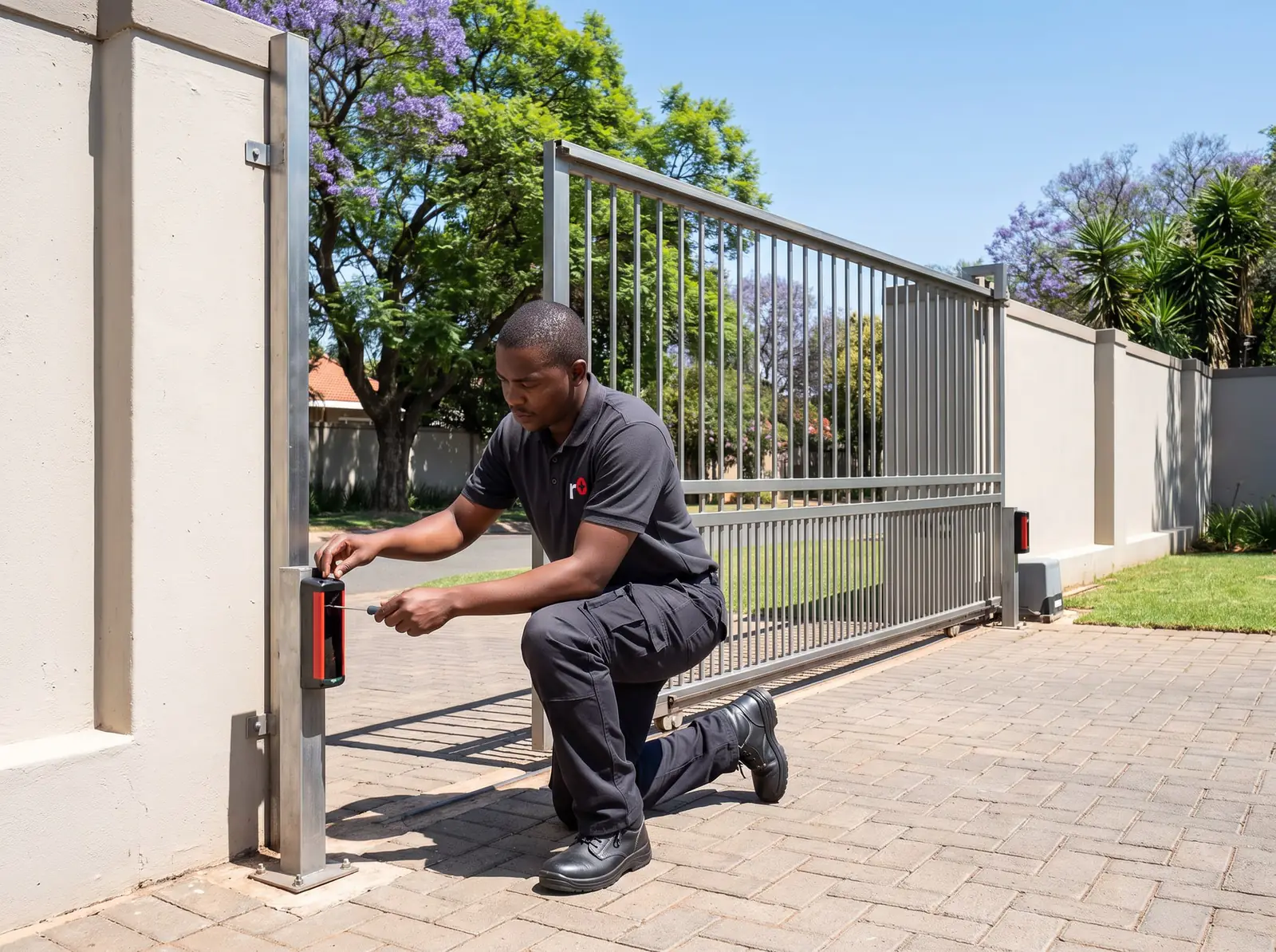
What a technician's service adds
A professional service covers what you can't safely reach. ET recommends one every year, including the spring tension:
- Spring tension and balance, adjusted with the right tools so the door is light and stays put.
- Springs greased between the coils, as Centurion specifies.
- Cables, drums, hinges and rollers checked for wear and fraying; worn rollers and hinges replaced, as Digidoor advises.
- The motor-head cleaned. Gemini suggests blowing out dust every six months with low-pressure air; that means the lid comes off, beside the mains wiring.
- The drive's mounting checked: brackets, the drawbar or the roll-up drive's clamp on the axle.
- Force and limits set again once the door runs freely, so the motor works with the door instead of against it.
On a roll-up door the drive sits on the axle beside the springs; on a sectional or tip-up door it's an overhead rail with a chain or belt. The work differs, but the order doesn't: door first, then motor.
Signs it needs a service now
- The door reverses or stops partway with nothing in the way.
- It's noisy: grinding, scraping or banging at one point of its travel.
- It feels heavy by hand, or drops when you let go halfway.
- One side runs ahead of the other, or a cable looks frayed.
- The motor beeps or its light flashes: see garage door not opening and garage door won't close.
A heavy door or a broken spring is never a reason to work the motor harder; the springs page explains why: garage door springs.
Booking a garage door service
We service sectional, tip-up and roll-up doors and the motors that drive them: Centurion, ET, Gemini, Digidoor and the rest. A service follows the order above, door first, and if anything is worn we tell you what and why before replacing it. All our spare parts are genuine, and every repair carries our six-month guarantee on our repairs. Your exact price is set in a free quote before any work starts. No call-out fee when we do the work. If no work is done, a R650 call-out fee applies.
Model-by-model steps are in our manual library, and our garage door work is on garage doors.
Questions
Servicing questions
How to service a garage door motor?
Start with the door: release the motor and check the door runs freely and stays put halfway. Grease only the springs (never the tracks or the motor), keep the tracks clean and dry, test the safety reverse monthly, and have the spring tension set professionally once a year. See the checks.
Can I service my garage door myself?
Partly. Testing the safety reverse, running the door by hand, cleaning the tracks, checking the beams and washing the door are all owner jobs. Spring tension, cables, drums and anything inside the motor-head are not: springs hold the door's weight under great force. See what a technician adds.
Book a technician
Get a garage door quote
Job card
We WhatsApp or call you back. Fields marked (required) are needed.