Brands · JVA
JVA energizer repairs, installation and upgrades
JVA energizers power a large share of the electric fences in Gauteng, from a single-zone Z11 on a townhouse wall to multi-zone systems round estates and factories. We install, repair and upgrade JVA energizers and the fences they run. Here's what the JVA range is, the problems we see most, what a JVA costs, and when a repair stops making sense.
2-year warranty and a compliance certificate on every new electric fence we install
24/7 emergency repairs across Gauteng
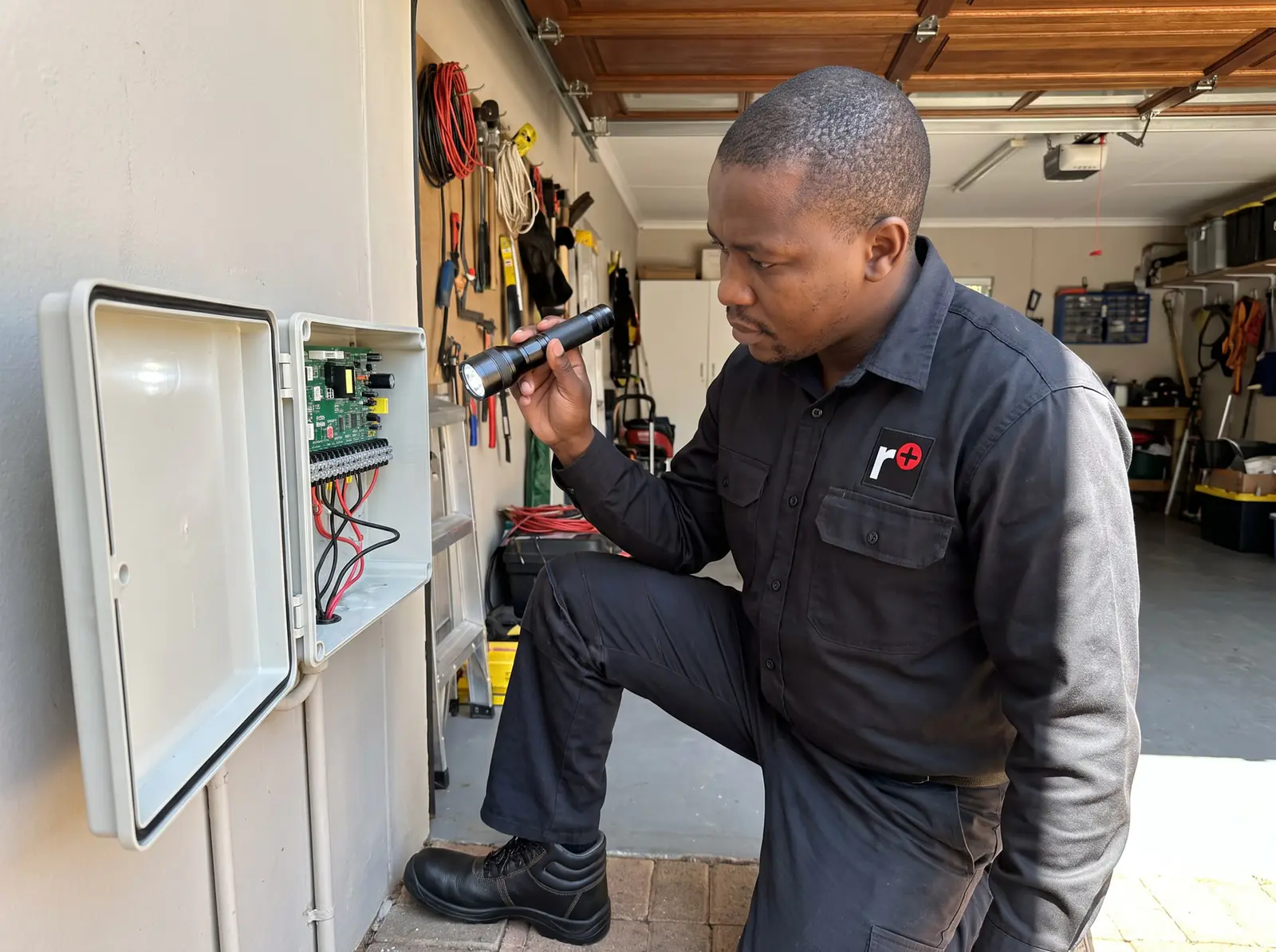
The JVA energizer range
JVA's Z-series energizers share one design: a wall-mounted plastic housing with a built-in alarm, a display that shows the voltage going out to the fence and coming back, and the option of a keypad in the house. They differ mainly in how hard they hit and how many zones they run. From JVA's own manuals:
- Z11: single zone, 9.0 kV, 1.4 joules. A small fence on a house or townhouse.
- Z13: single zone, 9.8 kV, 2.8 joules.
- Z14 and Z14R: single zone, 9.0 kV, 4 joules; the Z14R adds three relay outputs for alarm panels and other equipment.
- Z18: single zone, 8.5 kV, 8 joules, for longer fences.
- Z114: single zone, 9.5 kV, 14 joules, for long or heavily planted perimeters.
- Z28: two channels of 4 joules each, so the fence can be split into two zones.
For bigger sites, JVA makes monitoring systems that watch many sections of fence at once: the ZM20 and ZM50 control and monitor 20 to 50 sectors, and the ZLM4 is a 4-zone low-voltage fence monitor that works with the Z-series.
What every Z-series JVA needs to work
Two things about JVA energizers explain a lot of the faults we're called for:
- They run on two supplies: a 16 to 18 V AC transformer from the mains, and a 12 V sealed lead-acid battery that keeps the fence live in a power cut. JVA's manual is clear that the energizer can't run without the battery.
- The battery wears out. Load shedding cycles it far harder than it was ever meant to be cycled. When the battery is low or failing, the energizer tells you, and if the charge keeps falling, it drops into a low-power mode and eventually stops.
So a JVA that has gone quiet after a long power cut, or keeps warning about its battery, very often needs nothing more than a new battery.
Common JVA electric fence problems
- Low voltage on the display, or a fence alarm that keeps going off: nearly always the fence, not the energizer. Plants touching the wires, a broken strand, a dirty or cracked insulator, or a corroded earth.
- Battery warnings, or the fence dies in a power cut: a battery at the end of its life, or a transformer that has failed so the battery is never charged.
- The energizer is dead: no mains, a blown transformer, a flat battery or a surge-damaged board.
- A service or status light flashing: the energizer reporting one of the faults its manual lists, from an open lid to a mains failure or a board fault.
- The keypad won't respond or shows a fault: the keypad's cable, a keypad damaged by a surge, or the energizer itself.
- The gate keeps alarming: a worn gate contact, or a gate that doesn't close fully.
- After a storm: lightning damage to the board, the keypad or the fence's earth system.
What the lights and flash codes mean on a Z-series, and the checks to try, are on our JVA energizer manual page.
What you can safely check
- Read the energizer's display and lights, or the keypad, and note what they show.
- Check the mains: the plug or isolator for the transformer, and the distribution board.
- Walk the fence from a safe distance, looking for branches, broken wires, an open gate or something leaning on the strands.
Then stop. Don't touch the fence wires, don't open the energizer and don't try to change its settings: an energizer stores a dangerous charge, its housing carries mains-derived power, and wrong settings can leave a fence that doesn't alarm. Changing the battery means opening the energizer, so it's one for a technician.
What a JVA costs, and repair or replace
In South African shops:
- JVA Z11 (1 zone): about R3 070 (Takealot)
- JVA Z13 (1 zone): about R3 370 (Takealot)
And typical figures in the market for fence repair work:
- Energiser repair: R800–R2 500 (Kandua)
- Simple repairs (insulators, a broken wire) including call-out: R700–R1 400 (Kandua)
These are the market's figures, not ours. Prices checked October 2026. A new battery, a fence fault or a failed transformer is always worth fixing. A board burnt out by lightning on an older, smaller JVA is often not, because a new unit costs little more than the repair, and a new one comes with its own manufacturer's cover. We give you both figures and let you choose. Your exact price is set in a free quote before any work starts. No call-out fee when we do the work. If no work is done, a R650 call-out fee applies.
Upgrading a JVA fence
Common upgrades we do on JVA systems:
- A stronger energizer for a fence that's been extended or is heavily planted, for example from a Z11 to a Z14 or Z18.
- Two zones instead of one with a Z28, so you know which side of the property has been touched.
- A keypad in the house, so the fence can be armed, disarmed and silenced without going outside.
- A link to your house alarm through the energizer's outputs, so armed response is told of a fence alarm.
- A fresh battery and a check of the charging where load shedding keeps flattening it. JVA specifies a 12 V sealed lead-acid battery for the Z-series, so that's what we fit.
New fences and major changes are built by certified electric fence installer, and we can issue an electric fence certificate where the fence meets the rules. See electric fence certificate.
Booking a JVA repair
We repair and install JVA energizers across Johannesburg, the East Rand and Centurion, as well as Nemtek. Tell us the model on the front of the energizer, what the display or lights show, and when the problem started. All our spare parts are genuine where the parts are still made, and every repair carries our six-month guarantee on our repairs. A fence that's down or alarming all night is covered by our 24/7 emergency repairs across Gauteng. No call-out fee when we do the work. If no work is done, a R650 call-out fee applies.
More on electric fencing, and the other makes on brands we work on. Repairs Plus is an independent installer and repairer. We are not the manufacturer.
Fault finder
What is your electric fence doing?
Pick what you're seeing for the likely causes, the safe checks you can do yourself, and when to stop and book. Taken from the manufacturers' own manuals.
What's it doing?
Likely causes
Electric fence · the alarm keeps going off
Most likely first
The fence voltage has dropped below the alarm level: something is touching the wires, or plants have grown into the fence.
The gate input is open: the gate isn't fully closed.
The fence condition is poor: dirty or failed insulators, or wet insulators after rain.
Safe checks you can do
When to stop and book
Never touch the fence wires or open the energiser. If the alarm won't clear, we'll find the fault on the fence.
From the official manuals: Nemtek Druid 25 and 28 user manual, Nemtek Druid LCD user manual.
Questions
Questions about JVA
Can a JVA energizer run without a battery?
No: JVA's manual says the Z-series can't operate without its 12 V battery, which also keeps the fence live in a power cut. A battery that has worn out is the most common reason a JVA stops working. Read what it needs.
Which JVA energizer do I need?
It depends on the fence's length, how much plant growth touches it and how many zones you want: a Z11 suits a small house fence, a Z14 or Z18 a longer one, and a Z28 splits the fence into two zones. We size it on site. See the range.
Is it worth repairing an old JVA energizer?
A battery, a transformer or a fence fault is always worth fixing; a lightning-damaged board on an older, smaller unit often isn't, because a new one costs little more. See repair or replace.
Book a technician
Get an electric fence quote
Job card
We WhatsApp or call you back. Fields marked (required) are needed.