Guides · Gate motor faults
Gate motor not working after rain or a lightning storm
Highveld storms are hard on gate motors. Water finds its way into the housing and onto the control card, the track silts up, the beams mist over, and a lightning strike nearby can reach the motor through its cables without the motor itself being hit. Some of these clear up as things dry out; others need a part. Here's how to tell which you're facing, the checks that are safe to do, and when to call us.
Six-month guarantee on our repairs
24/7 emergency repairs across Gauteng
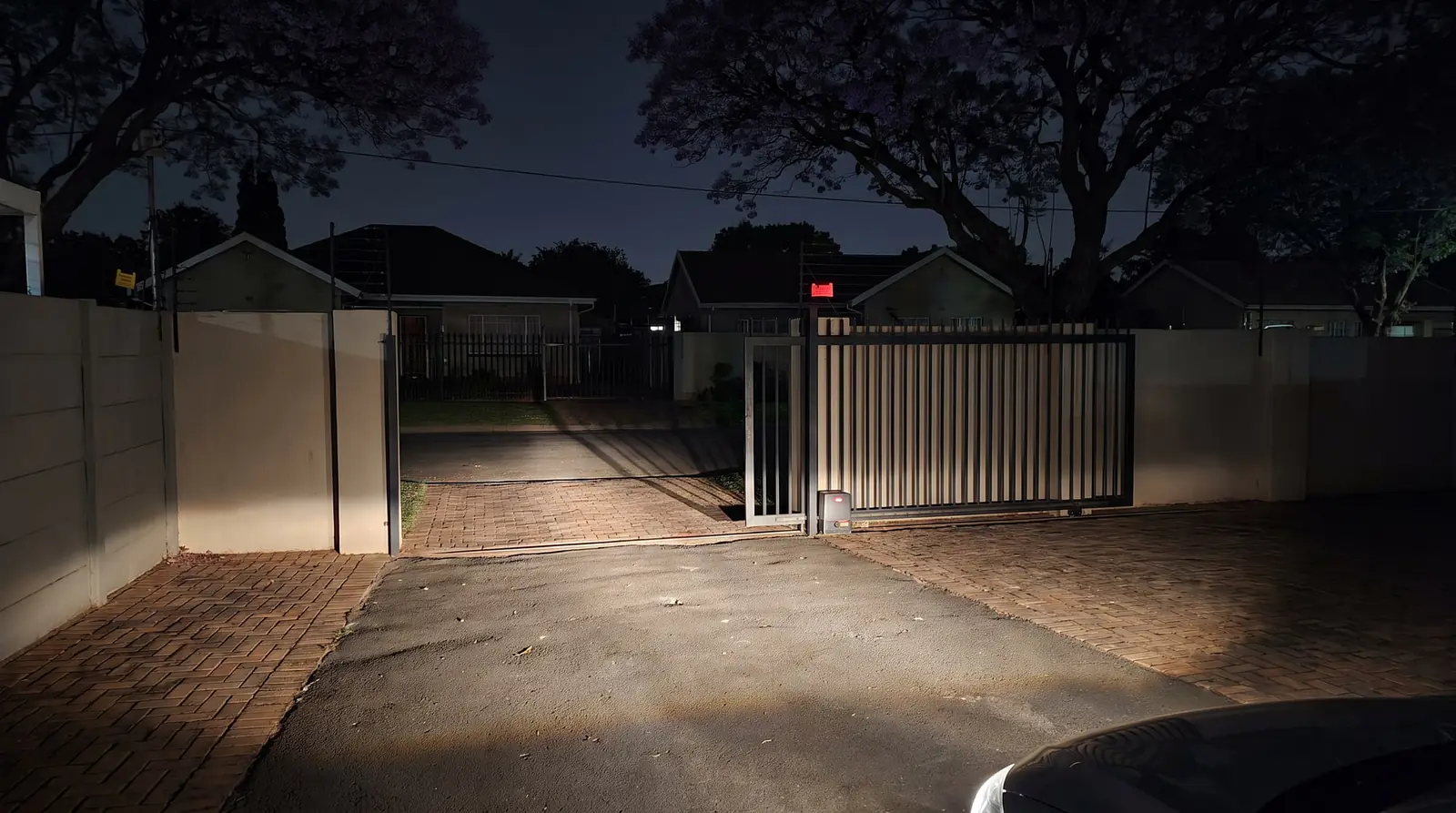
First: stay safe, and wait out the storm
Don't work on a gate motor while the storm is still around, and don't touch the motor, the fence or the gate if any cable is damaged, burnt or sparking. If the gate is stuck and you need to get in or out, open it by hand with the release key as your manual shows: see how to open a gate manually. Then come back to it in daylight, when things have dried a little.
Which of these matches what you see?
- The gate works, but oddly: it stops partway, opens by itself or reverses for no reason. Usually water.
- The motor is completely dead, with no lights, no beeps and no response to anything. Possibly lightning, or a tripped supply.
- It hums or clicks but won't move. The gate itself may be stuck in a flooded or silted track.
After rain: water in the wrong places
Moisture on the control card. Centurion's fault table for a gate that moves a short distance and stops lists a "spurious trigger": a short caused by moisture on the card's trigger inputs, which the motor reads as a button being pressed. The same kind of fault can make a gate open or stop by itself. It often clears as the motor dries, and comes back with the next storm unless the cause is fixed.
Water getting in. Gemini asks for water, mud and sand to be kept out of the motor, and ET puts the responsibility on the installer to site the motor where water can't get in and to seal every cable entry. Cracked covers, unsealed cable holes and a motor sitting in a dip where water pools are the usual routes in.
The track. A storm washes sand and stones into a sliding gate's track and can leave it standing in water. Gemini wants a furrow to drain water away from the track. A gate that drags through silt trips the motor's collision sensing, so it stops and reverses as if something were in the way.
The beams. Rain, mist and mud splashed on the lenses can blind the safety beams, so the gate won't close or keeps reopening. See gate motor not working.
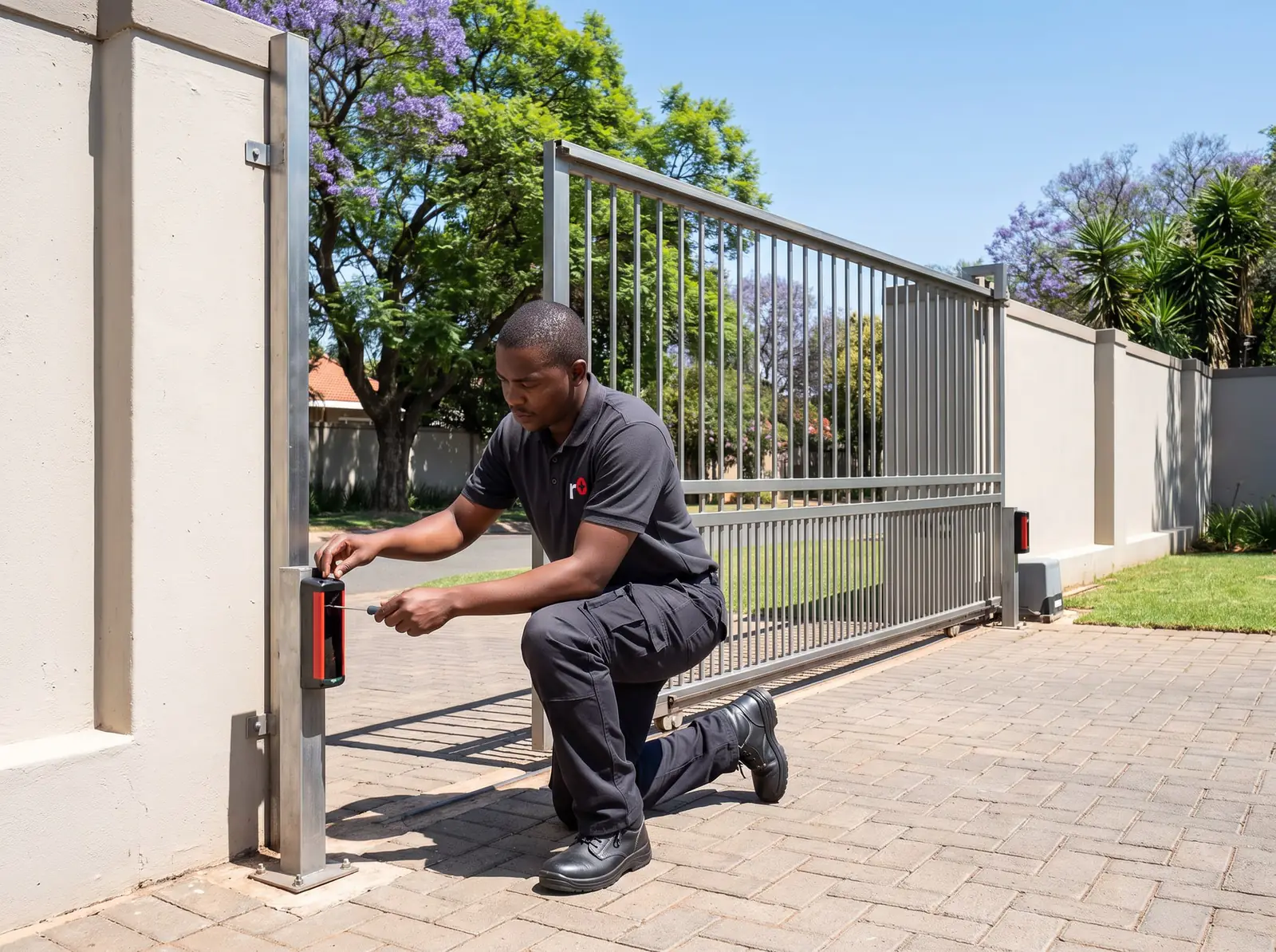
What you can safely check after rain
- Clear the track of sand, leaves and stones, and push the gate by hand (released) to feel for dragging.
- Wipe the beam lenses and check nothing has been knocked out of line.
- Look at the motor from outside: is the cover cracked or off, is it standing in water, are ants or mud around the base?
- Give it time. If the faults were water on the card, a dry day often brings the gate back to normal.
- Try the remote, then the intercom. If one works and not the other, the fault is in that device, not the motor.
Don't open the motor, dry it with a heater or spray anything onto the card. The card sits beside the battery and the mains connection, and a wet card that's powered can be damaged further.
If the gate keeps misbehaving after the weather clears, the water got somewhere it shouldn't, and it will happen again. That's a repair: drying and cleaning the card, replacing a damaged cover or seal, and stopping the water at its source.
After lightning: a dead motor
A gate motor doesn't need a direct hit to be damaged. A strike nearby can travel in along the mains supply, the intercom cable, the safety beams' wiring or the electric fence, and the control card is the most sensitive part in its way. The receiver, the beams, an intercom or the charger can go at the same time.
Signs it was lightning rather than water:
- the motor is completely dead, or its lights come on but nothing responds;
- other things on the same cables failed at the same moment: the intercom, the fence energiser or the beams;
- there's a burnt smell, or visible scorching on a cable or a cover.
The makers build surge protection into their control cards, but Centurion is clear that it only reduces the risk, and only works when the motor is properly earthed. ET and Gemini both exclude lightning damage from their own product cover, and ET adds mains surges, a gate shorting onto the electric fence, and water damage. What a board repair involves is on gate motor PC board repairs.
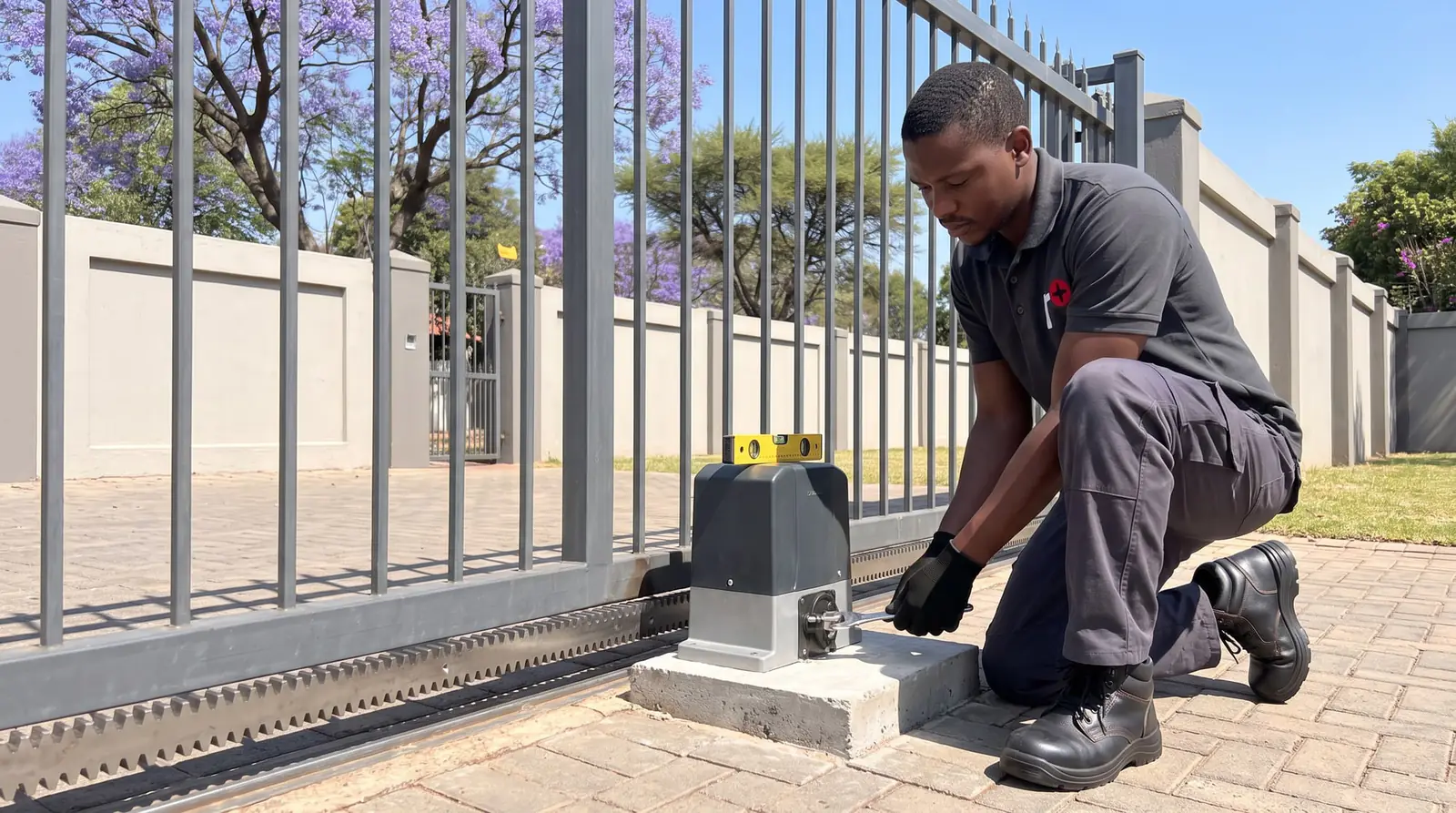
What you can safely check after lightning
- Check the supply: has the motor's isolator or a circuit breaker tripped at the distribution board? An earth leakage breaker can trip in a storm without anything being damaged. Reset it once, and if it trips again, leave it off and call us.
- Check the intercom and the fence: if they died at the same time, it points to a surge.
- Open the gate by hand and keep it secure while you wait for a repair.
Don't keep resetting a breaker that trips, and don't touch an energiser or fence wiring that's been struck. Those are jobs for a technician.
If the car has to stay outside tonight
A gate that's stuck shut after a storm often means the car spends the night in the street, or the gate is left open because it won't close. If you can't get the gate released and locked, park where the car is in view of the house and lit, and take the gate remote out of it. A vehicle tracker is worth more on those nights than on any other; if you're weighing one up, MiTrekker compares the tracking companies side by side.
Protecting a gate motor from the next storm
- Earthing. Centurion's surge protection relies on the earth return through the mains earth and an earth spike next to the motor. We check that the earth is connected and sound.
- Steel wire armoured cable, which Centurion recommends for the mains supply; its armouring gives better protection against lightning.
- Sealed cable entries and a sound cover, so water can't get in.
- Drainage for the track, so the gate isn't standing in water.
- Keep the gate clear of the electric fence, because a gate shorting onto the fence wires can carry the fence's pulse, or a strike, into the motor.
- A regular service, which catches a cracked cover or a missing seal before the rainy season: see gate motor service.
None of this makes a motor lightning-proof; the makers don't claim that either. It makes damage less likely, and a repair smaller when it happens.
Getting it fixed
We repair gate motors damaged by water and lightning: control cards, receivers, chargers, beams and batteries, and the intercoms and fences that often go with them. If a board can't sensibly be repaired, we tell you, and price a replacement. All our spare parts are genuine, and every repair carries our six-month guarantee on our repairs. Your exact price is set in a free quote before any work starts. No call-out fee when we do the work. If no work is done, a R650 call-out fee applies.
If the power went off and on during the storm rather than the motor being struck, see also gate motor not working after load shedding.
Questions
Rain and lightning questions
How to protect a gate motor from lightning?
Make sure it's properly earthed, through the mains earth and an earth spike beside the motor, because the control card's surge protection depends on it. Steel wire armoured supply cable, sealed cable entries and a gate kept clear of the electric fence help too. Nothing makes it lightning-proof. See protection.
What happens if my garage door opener is struck by lightning?
Usually the control card or the receiver fails, so the motor is dead or won't respond to remotes; the charger and courtesy light can go with it. Check the breaker at the distribution board once, then have it repaired. The makers' cover generally excludes lightning damage. See what lightning does.
Book a technician
Get a gate motor quote
Job card
We WhatsApp or call you back. Fields marked (required) are needed.